Under 100 Lbs a Month: Hand Tools
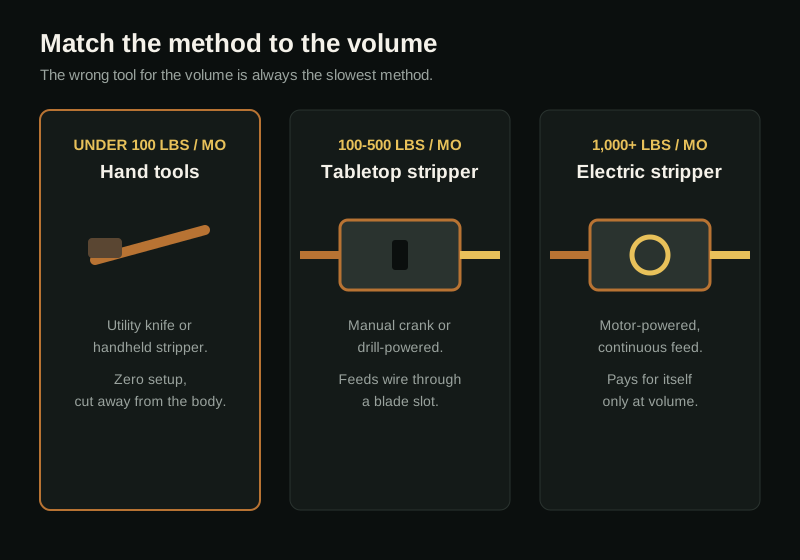
A sharp utility knife or a handheld stripper. Zero setup time, full control. Score the insulation and pull — never saw at the wire. This is the fastest method at small volume because there is nothing to set up.
The fastest way to strip copper wire depends on one thing: how much wire you have. A utility knife beats a machine at ten pounds, and a machine beats a knife at a thousand. Here is the right method for your volume, plus the Romex walkthrough everyone asks for.
Stripping is a production problem. The wrong tool for your volume is always the slowest method — and the most dangerous one. Pick your tier, then work the method.
A sharp utility knife or a handheld stripper. Zero setup time, full control. Score the insulation and pull — never saw at the wire. This is the fastest method at small volume because there is nothing to set up.
A manual crank or drill-powered tabletop stripper. Clamp it down, feed the wire through the blade slot, and pull. Once the pile justifies the setup, this beats a knife by an order of magnitude.
A motor-powered stripper with continuous feed. This is production equipment: it only pays for itself when the wire stream is steady and heavy. Never buy the machine before you have the volume.
Under 100 lbs a month, nothing beats a sharp blade and no setup.
Hundreds of pounds: the crank stripper earns its bench space.
Thousands of pounds: the machine pays for itself. Otherwise it gathers dust.
Stripping injuries are almost always the same story: a dull blade, no gloves, cutting toward the body. Five rules prevent nearly all of them.
Lay the Romex flat and run a utility knife lightly down the length of the outer sheath — just deep enough to cut the plastic, not the conductors inside. One confident pass beats three hesitant ones.
Bend the cable at the score line and peel the sheath away like a banana. It should split clean along your cut. Pull the paper filler out with it.
The bare copper ground wire needs no stripping at all — pull it free and set it aside. That is bare bright copper already, the top grade, for zero work.
Run the black and white insulated conductors through your stripper or score-and-pull them with the knife. Done: three clean copper conductors from one cable.
Every quote, pickup, and payment runs through one person who answers the phone: Sonny Johns at 312-880-8174. No portals, no ticket queues, no waiting on a committee.
A mechanical stripper matched to your volume. Under 100 pounds a month, a sharp utility knife or handheld stripper is fastest because there is no setup. At 100 to 500 pounds, a tabletop manual stripper wins. Past 1,000 pounds a month, an electric stripper pays for itself. The slowest method is always the wrong tool for the volume.
Score the outer sheath lengthwise with a utility knife, peel it back, pull the bare ground wire out first since it needs no stripping, then strip the black and white conductors individually. Work on a table, cut away from your body, gloves on.
Slice the outer jacket lengthwise with a hookbill knife, being careful to only score the jacket, then peel it away from the copper bundle. Thick cable like feeders and DLO is the best stripping candidate there is — heavy copper under one clean jacket — and a tabletop or electric stripper earns its keep here.
Only if the volume justifies it. Occasional stripping or mostly thin wire: no, sell it insulated. Regular heavy wire in the hundreds of pounds: a tabletop manual stripper. Steady thousands of pounds: electric. Never buy the machine before you have the wire stream.
You do not. Pull the bulbs and plugs off if you like, then sell the strands as-is. The copper inside is under 20 percent of the weight and the labor is never worth it — every experienced scrapper agrees on this one.
Yes, with basic precautions: cut away from your body, wear cut-resistant gloves and eye protection, work on a stable surface, and keep the blade sharp. Dull blades slip, and slips cause most injuries.
No. Burning wire insulation is illegal under the Clean Air Act, releases toxic dioxins and lead compounds, and oxidizes the copper so badly that most yards reject burnt wire outright. Mechanical stripping or sell it insulated — those are the two options.
Or skip the work — sell it as-is. Ironcrest buys insulated wire, whole motors, and mixed lots. Call 312-880-8174.