▲ IRONCRESTINDUSTRIALINDUSTRIAL SURPLUS BUYERS
SHOP PROGRAM • BIN SETUP • SORTING • PICKUP

MACHINE SHOP CARBIDERECYCLING PROGRAM

Your shop already generates the material — worn inserts, dead end mills, grinding sludge. A recycling program just catches it before the trash does. Setup takes ten minutes.

10-Minute SetupSorting RulesNo MinimumsScheduled Pickup
THE CASE

The bin is a revenue line

Every insert pulled and every end mill retired is tungsten carbide with a buyer. The only question is whether it lands in a labeled bin or a dumpster.

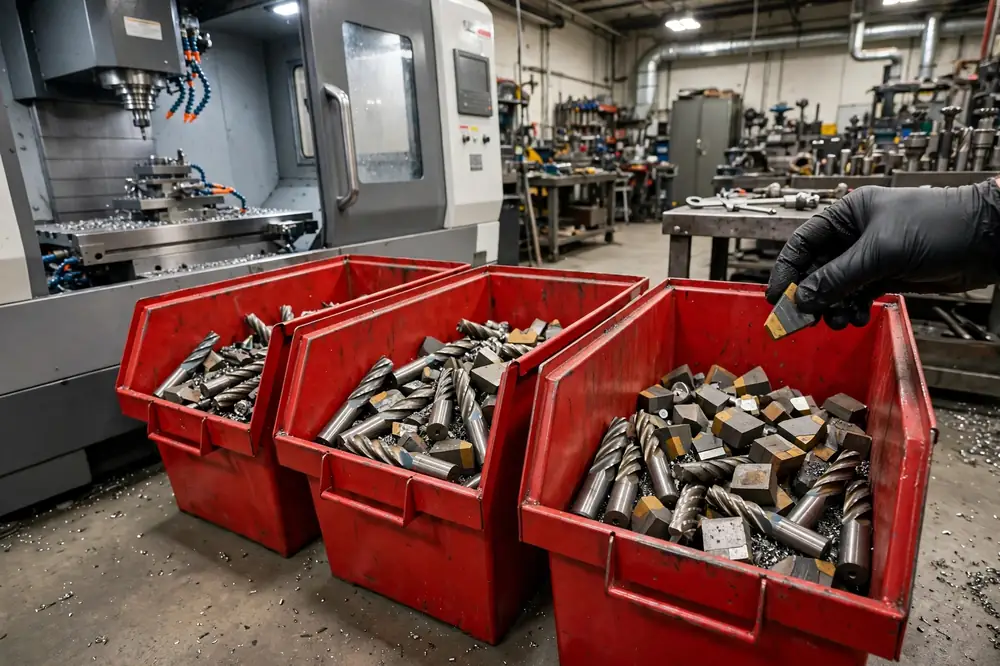
Red scrap bins for carbide recycling lined up beside a CNC machining center, with a gloved hand dropping a used carbide insert into a bin
The whole program: labeled bins at the machines, sorted from day one. Ten minutes to set up.

Shops recovering their carbide stream typically see 4–10% of tooling spend come back — found money on material that is already paid for. On $50,000 of annual tooling, that is $2,000–$5,000 a year for bins and a phone call. And the sorting that earns the best prices happens automatically when the bins are labeled from the start: sorted carbide pays better than mixed mystery bins, every time.

There are no minimums and no enrollment. One machine or fifty, a coffee can or a drum — every bucket counts, and the program scales with the shop.

THE 10-MINUTE SETUP

From zero to recovering, step by step.

01

Put a bin at each machine

A small sturdy container — a coffee can, a parts bin, a 5-gallon pail — at every machine that consumes carbide. Label it CARBIDE ONLY in big letters. Worn inserts and end mills go in the moment they come out of the machine, not later.

02

Separate solid from brazed

Two streams, two values: solid carbide tooling (end mills, drills, inserts) in one bin, brazed tooling (carbide tips on steel shanks) in another. Brazed tools are priced on carbide content, so mixing them into the solid stream drags the whole bin down.

03

Contain the sludge separately

If the shop grinds carbide, the sludge trap and sump cleanouts are a tungsten stream of their own. Keep grinding sludge in sealed containers, kept dry and separate from dry tooling — and see our grinding sludge guide for handling details.

04

Make it a habit, not a project

The program lives or dies on the two-second habit: pull the tool, drop it in the bin. Mention it in the shift handoff once, label the bins clearly, and it runs itself. Nobody sorts a year's worth of mixed scrap — everybody can drop a tool in the right can.

05

Call when a bin fills

When a bin fills — a coffee can or a 55-gallon drum, no minimum — call 312-880-8174. On bigger lots, we handle the freight so you do not lift a finger. Smaller lots ship or mail in with simple instructions.

06

Get the itemized settlement

Every lot is weighed, graded by category, and settled with an itemized report showing weights and deductions line by line. Payment follows quickly. File the report with the tooling budget — it is a revenue line now.

SORTING RULES

What goes where

Three streams cover nearly everything a machine shop generates.

BinWhat goes inKeep out
Solid carbideEnd mills, drills, inserts, reamers, burrs — any solid carbide toolingBrazed tools, HSS, steel shanks
Brazed carbideBrazed lathe tools, tipped tooling, saw tipsSolid carbide, loose steel scrap
Grinding sludgeSludge-trap material, sump cleanouts, filter cakesEverything dry — sludge stays sealed and separate

Grinding sludge detail: sludge is priced on dry carbide content, so sealed containers and honest labeling get the best result. Our dedicated guide covers handling and what to send for a quote: We Buy Carbide Grinding Sludge.

One rule above all: never let carbide hit the general scrap dumpster. Once it mixes with steel scrap at the yard, its value is gone. The bin is the entire program.

What the settlement looks like

When a lot arrives, it is weighed on a calibrated scale, graded by category — solid tooling, brazed, inserts, sludge — and settled against current market levels for each stream. The settlement report itemizes every weight and every deduction separately: no bundled mystery math. Payment follows quickly by check, wire, or cash. File the report with the tooling budget, because that is what it is now — a revenue line with documentation.

Getting the crew on board

The program needs exactly one habit from the crew: pull the tool, drop it in the labeled bin. Make the bins impossible to miss, put them where the tools come out of the machines, and mention it once at the shift handoff. Nobody needs a training session for a labeled can. The shops where this fails are the shops where the bin was across the room — proximity is the entire change-management plan.
COMMON QUESTIONS

Asked by shops working with this every day.

How much shop space does this take?

Almost none. A coffee can at each machine and a 5-gallon pail or small drum at the collection point covers most shops. The program grows with volume — start small, scale when bins fill faster.

Do we need to clean or sort the carbide further?

No. Drop worn tools in the right bin and you are done. Ironcrest handles grading, testing, and settlement — the itemized report shows exactly how each category was valued.

What if we only generate a small amount?

There are no minimums. A single coffee can of inserts is worth the call, and small lots mail in with simple instructions. Every bucket counts — small shops are welcome here.

We grind carbide. What do we do with the sludge?

Keep it sealed, dry, and separate from dry tooling. Sludge is priced on dry carbide content, and even a single drum is worth a quote. See our grinding sludge page for the full handling guide.

How does pickup work for bigger lots?

On bigger lots, we handle the freight so you do not lift a finger — drums and pallets picked up on arranged carriers, anywhere in the country. You just make the call when the bins fill.

How do we get paid?

Every lot gets an itemized settlement report — weights by category, deductions shown separately — and quick payment by check, wire, or cash. One contact throughout: Sonny at 312-880-8174.

WHEN THE TOOL IS DONE

When the Tool Is Done

This whole guide is the seed: put the bins out, call 312-880-8174, and turn the tooling budget into a revenue line. There are no minimums — a one-machine job shop's coffee can counts exactly as much as a production floor's drum. On bigger lots, we handle the freight so you do not lift a finger. Every bucket counts.

CALL 312-880-8174