▲ IRONCRESTINDUSTRIALINDUSTRIAL SURPLUS BUYERS
TOOL & CUTTER GRINDING • DIAMOND WHEELS • SHOP SAFETY

HOW TO SHARPENCARBIDE TOOLS

Carbide is harder than almost everything in the shop, which means sharpening it takes the right wheel, the right angles, and real respect for the dust it makes. Here is the complete process machinists actually use, from wheel selection to the final edge check.

Diamond WheelsWet GrindingRelief AnglesDust SafetyWhen to Stop
SAFETY FIRST

Read this before the wheel spins

Carbide grinding dust is a serious health hazard. The cobalt binder in tungsten carbide becomes airborne as fine dust, and cobalt dust is a recognized respiratory hazard. Every rule below is non-negotiable.

Safety baseline: Grind carbide wet or with dust collection, wear a properly fitted respirator, and never dry-grind carbide without dust controls in place. Check the safety data sheet (SDS) for the material you are grinding and follow it. This guide is an information resource, not a substitute for shop training or certification.

Beyond dust, the wheel itself deserves respect. Use only diamond or green silicon-carbide wheels for carbide, ring-test any wheel before mounting it, keep the guards on, and never exceed the wheel's rated maximum RPM. A wheel that comes apart at speed is one of the most dangerous objects in a machine shop.

THE RIGHT WHEEL

Diamond or green silicon carbide — nothing else cuts carbide

Carbide laughs at ordinary aluminum-oxide grinding wheels. The wheel glazes, the carbide barely notices, and you generate heat and dust for nothing. Two wheel types actually work.

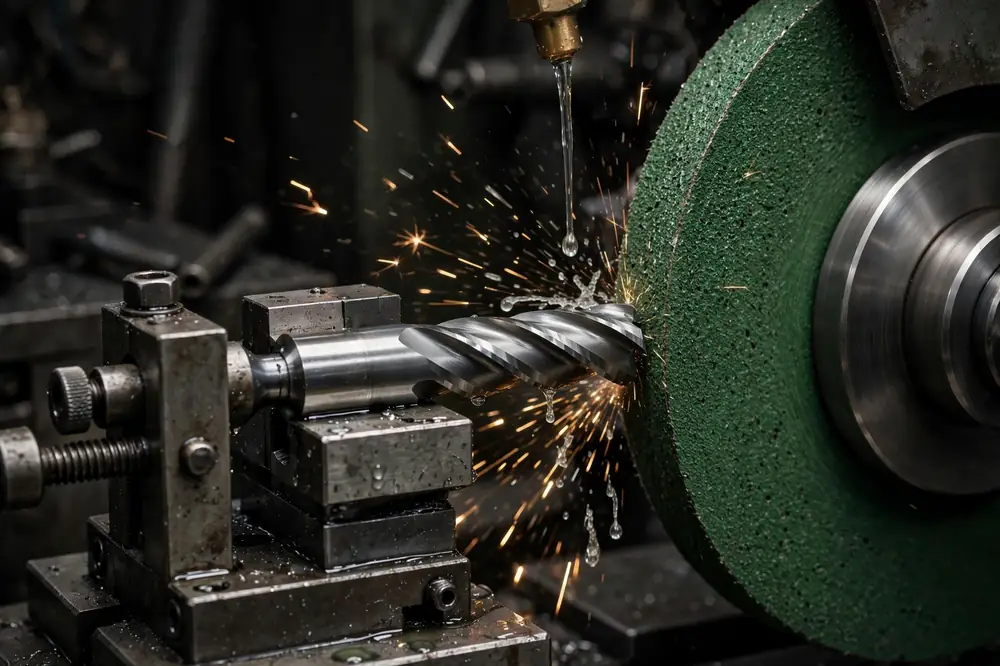
A solid carbide end mill being sharpened on a green silicon-carbide grinding wheel with coolant on a tool-and-cutter grinder
A carbide end mill on a tool grinder with a green silicon-carbide wheel and coolant flow. Wet grinding keeps the dust down and prevents thermal cracking of the carbide.

Diamond wheels are the professional standard for sharpening carbide. The diamond abrasive is harder than the carbide, cuts cleanly, and holds its form, which is what lets you grind accurate relief angles and sharp edges. Diamond wheels belong on tool-and-cutter grinders and surface grinders, run wet with coolant or water.

Green silicon-carbide wheels (often labeled GC) are the practical choice for bench grinders and offhand touch-ups. They cut carbide where a standard gray or white aluminum-oxide wheel just rubs and glazes. Green wheels wear faster and cut less precisely than diamond, but for refreshing a lathe tool bit or touching up a drill, they are the right wheel at the right price.

Dress and true the wheel before every serious session. A loaded or out-of-round wheel generates heat, and heat is carbide's enemy: thermal shock cracks carbide edges. Keep the wheel clean, keep the coolant flowing, and take light passes.
THE SHARPENING SEQUENCE

Sharpening an end mill, step by step.

01

Inspect the tool first

Look at the cutting edges under magnification. If flutes are chipped deep, the tool is undersize from prior regrinds, or the wear reaches past the coating into heavy edge breakdown, sharpening will not bring it back. Set those aside for the scrap bin.

02

Dress and true the wheel

True the diamond or green silicon-carbide wheel so it runs concentric and clean. A freshly dressed wheel cuts cooler and leaves a better edge. Confirm the guards are on and the coolant or drip feed is running.

03

Grind the flute face to refresh the edge

For offhand work, the practical move is to lightly grind the face of the flute, which re-sharpens the cutting edge where it meets the relief. Use the tool rest, keep the factory rake angle, and take light passes with steady coolant flow.

04

Restore the relief behind the edge

On a tool-and-cutter grinder, grind the primary relief behind each cutting edge to restore clearance, typically around the factory angle. Without relief, the tool rubs instead of cuts. Keep the relief consistent on every flute so the tool stays balanced.

05

Keep it wet the whole time

Never let the carbide run dry and hot. Dip or flood with coolant between passes, watch for color change on the tool, and stop if you see straw or blue discoloration near the edge. Overheating cracks carbide and ruins the temper of any steel shank.

06

Check the edge and measure

Inspect every edge under magnification for a clean, unchipped line. Measure the diameter: each regrind removes stock, and the tool is only good as long as it stays within the tolerance your work needs. Record the new size on the tool.

KNOW WHEN TO STOP

Sharpening has a limit — and that limit is normal

Not every dull tool is a sharpening candidate. Knowing when to stop saves grinding time and keeps bad tools out of the machine.

Tools below about 1/4 inch in diameter are rarely worth a full regrind: the labor costs more than a new tool. Deep chipping that needs heavy stock removal changes the tool's geometry and diameter past usefulness. Tools that have been reground several times are already undersize and belong in the scrap stream, not back on the grinder.

Coatings add one more consideration. A regrind removes the coating from the cutting edge. For many jobs the uncoated reground tool still cuts fine, but if the original coating was doing real work — high-heat alloys, long production runs — recoating adds cost that can erase the savings. Run the numbers before you commit wheel time.

The honest rule: sharpen what still has geometry worth saving, and sell the rest. A drawer of tools too far gone for the grinder is not waste — it is tungsten carbide waiting for a buyer.

COMMON QUESTIONS

Asked by shops working with this every day.

Can you sharpen carbide on a regular bench grinder?

Yes, for touch-ups, if the wheel is green silicon carbide and you grind wet or with dust control. A standard aluminum-oxide wheel will glaze and overheat the carbide instead of cutting it. Full regrinds with accurate angles need a tool-and-cutter grinder with a diamond wheel.

Why does my carbide keep chipping when I grind it?

Usually heat or vibration. Grinding dry, pressing too hard, or running a loaded wheel creates thermal shock that cracks the edge. Light passes, a freshly dressed wheel, steady coolant, and a firm setup fix most of it.

Do I need to re-coat a tool after resharpening?

Not always. The regrind exposes uncoated carbide on the cutting edge, and for many jobs that cuts perfectly well. Recoating makes sense for high-heat materials and long production runs where the original coating was earning its keep. Compare the recoat quote against the price of a new tool.

How many times can an end mill be resharpened?

Until the diameter or geometry no longer meets the job. Each regrind removes a few thousandths of stock. Shops typically get two to four good regrinds from a quality end mill before it drops below usable size or tolerance.

Is carbide grinding dust really dangerous?

Yes. Grinding carbide produces fine dust containing cobalt and tungsten, and cobalt dust is a recognized respiratory hazard. Grind wet or with proper dust collection, wear a respirator, and follow the material's safety data sheet. Never treat dry carbide grinding as harmless.

What do I do with tools that are too worn to sharpen?

They are still solid tungsten carbide, and carbide has real scrap value by the pound. There are no minimums: a single drawer of dead end mills is worth a call. Ironcrest buys worn carbide tooling nationwide at 312-880-8174.

WHEN THE TOOL IS DONE

When the Tool Is Done

Tools too worn to sharpen are still tungsten carbide — and still worth money. There are no minimums and no small-lot embarrassment here: every bucket counts, from a single drawer of dead end mills to a drum of shop cleanout. On bigger lots, we handle the freight so you do not lift a finger. Call 312-880-8174 and turn the drawer of shame into cash.

CALL 312-880-8174