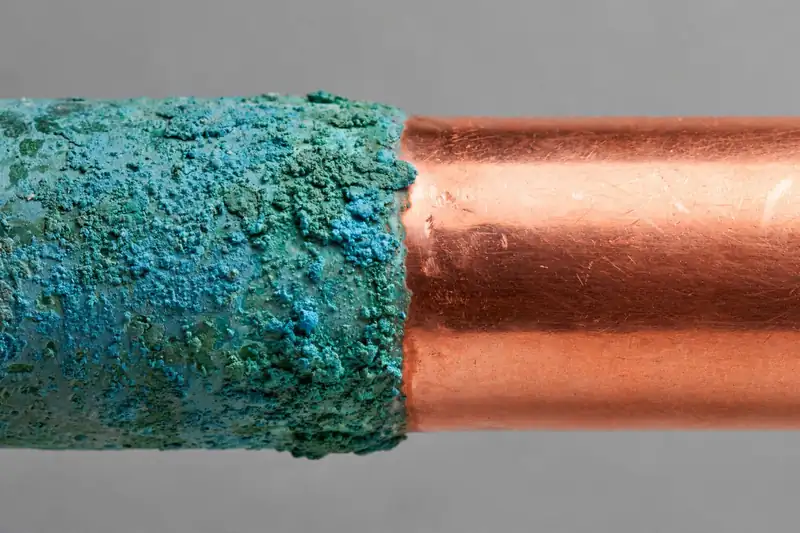
The Reaction
Copper reacts with oxygen, moisture, and carbon dioxide in the air. Over years, those reactions build a blue-green surface layer called patina — or verdigris. It is the same coating on the Statue of Liberty.
That blue-green coating on old copper pipe, roofs, and gutters has a name — patina — and a simple explanation. Here is what it is, why it happens, and the question every seller asks: does green copper still pay?
Copper does not rust like steel. It goes through its own slow transformation, and the green is the final stage.
Copper reacts with oxygen, moisture, and carbon dioxide in the air. Over years, those reactions build a blue-green surface layer called patina — or verdigris. It is the same coating on the Statue of Liberty.
Bright copper darkens to brown within months outdoors, shifts through dark tones over a few years, and reaches full green in roughly 5 to 10 years. Indoors, copper can stay bright for decades.
Patina is not damage — it is armor. The layer seals the metal beneath and stops further corrosion. That is why copper roofs last a century and old statues stand for generations.
A thin layer that protects the metal beneath it.
Green or bright, it grades on the metal, not the color.
Send it green. Cleaning adds nothing to your number.
Old pipe from a repipe, green gutters from a tear-off, weathered roofing copper — it all grades on the metal underneath the patina. No cleaning, no prep, no minimums.
Copper reacts with oxygen, moisture, and carbon dioxide in the air over time, forming a blue-green surface layer called patina (verdigris). It is the same process behind the green color of the Statue of Liberty. The patina actually protects the copper underneath from further corrosion.
Yes. Patina is only a thin surface layer — the copper underneath is unchanged. Green copper pipe, wire, and fittings still grade and sell as copper. Only material that is deeply pitted or crumbling, where actual metal has been lost, might grade differently, and that is about weight lost, not the color.
No need. Cleaning patina does not raise the grade or the price — buyers grade on the metal itself, not the surface color. Save your time and your cleaning supplies; send the copper as it is.
Not usually. Surface patina is cosmetic and even protective — it seals the metal beneath. Real damage is pitting, flaking, or crumbling, where the metal itself is breaking down. Most green copper from plumbing, roofing, and gutters is perfectly sound underneath.
Verdigris is the common name for the blue-green patina that forms on copper, brass, and bronze. Chemically it is a mix of copper carbonates and sulfates built up from years of exposure to air and moisture. It is the same coating on old copper roofs and bronze statues.
Outdoors it typically takes 5 to 10 years for the full green patina to develop, though the stages start much sooner: bright copper darkens to brown within months, then shifts through dark tones before the green appears. Indoors, copper can stay bright for decades.
Send photos of your copper — green patina, brown tarnish, or bright and shiny. You will get a firm quote based on the metal, not the color.