Send photos
Photograph the material, nameplates and quantity, then text them to 312-880-8174 or call.
I am Sonny, and I will tell you something no scrap buyer is supposed to say: your best once-fired brass is worth more to reloaders than it is to me. This guide explains the reloader's world — headstamps, Boxer vs Berdan primers, and case inspection — so you can sort the valuable stuff from the scrap pile. Follow published load manuals — this guide is about the brass, not the loading.
 WE BUY
Last updated: October 2026
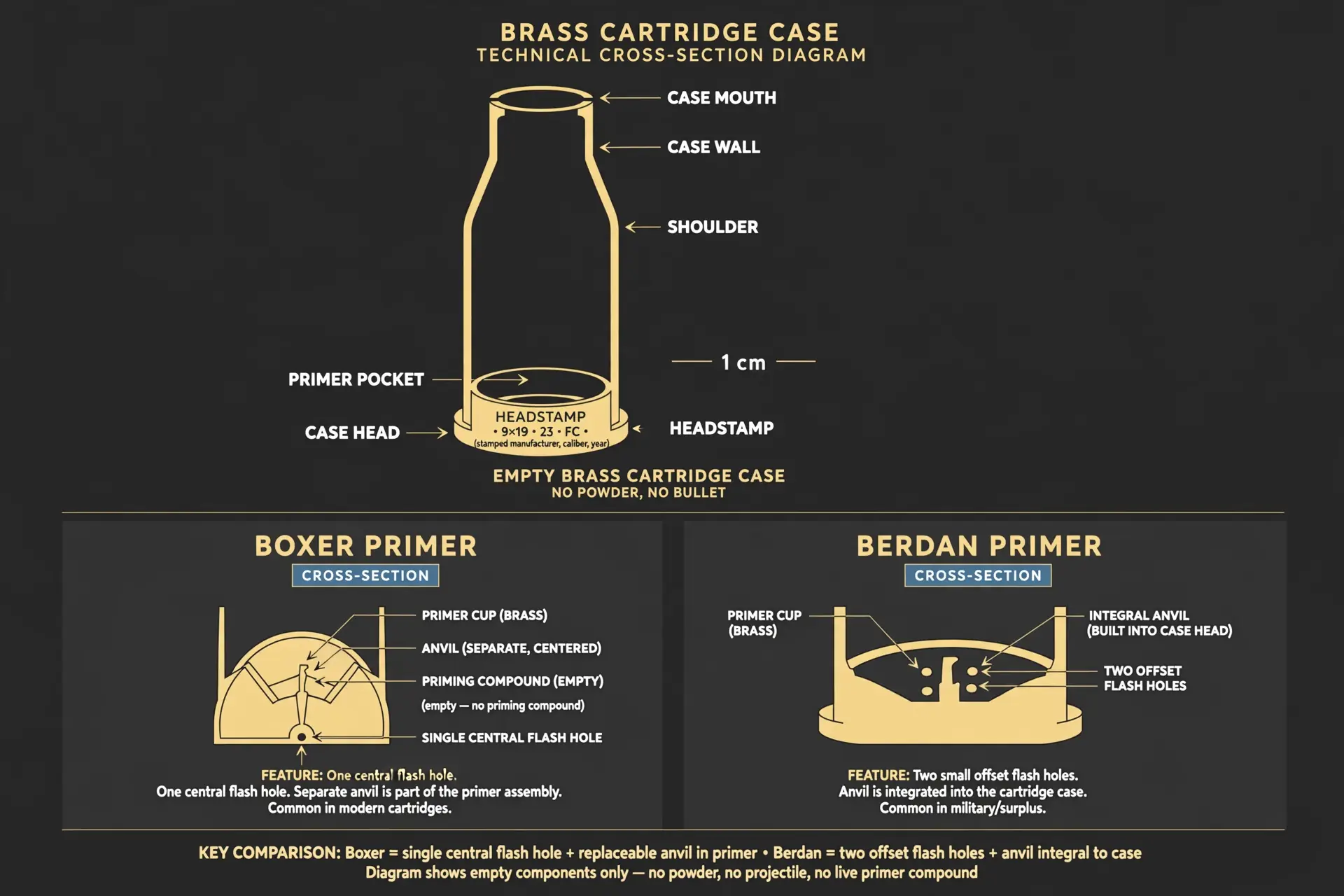
Flip any fired case over and look at the flat base — the head. The stamping pressed into it is the headstamp, and it names the manufacturer and the caliber, sometimes with a year code. That little stamping is the reloader's whole filing system: cases get sorted by headstamp because brass from the same maker in the same caliber behaves the same way, and consistent brass is what consistent results are built on.
When you are sorting a bucket of range pickup, the headstamp is how you separate the 9mm from the .380, the good US commercial brass from the mystery surplus. Mixed headstamps are fine for practice work; matched headstamps are what precision reloaders chase. Follow published load manuals — this guide is about the brass, not the loading.
Every primer system looks the same from the outside. Look inside the case and the difference is obvious. A Boxer-primed case has one single flash hole in the center of the primer pocket, and the little anvil — the part the firing pin crushes the primer against — sits inside the primer itself. This is the American standard, and it is the case a reloader wants: knock out the old primer, press in a new one, and the case is back in business.
A Berdan-primed case has two small flash holes, offset from center, and the anvil is built into the case itself. It is common in military surplus and some foreign ammunition. Reloaders hate it for good reason: the standard decapping pin finds no central hole, pins break, and the special tools to remove Berdan primers are slow and fussy. The honest call is simple — Berdan brass goes in the scrap bucket, not the reloading bucket. That is one of the main things I buy.
Reloaders inspect every case before it goes near a die, and the checklist is short and strict. Split necks and body cracks are instant failures — brass work-hardens with each firing, and a crack only grows. Loose primer pockets (a new primer slides in with no resistance) mean the case head is done. Bad dents, bulges, and corrosion fail too. When a case fails inspection, it does not get a second opinion — it gets scrapped.
Steel cases deserve their own line here: a lot of cheap imported ammunition uses steel cases with a brass-colored wash, and those are not reloadable brass at all. The magnet test sorts them in one pass. Clean once-fired brass with sharp headstamps and tight primer pockets is what reloaders pay real money for — and the cases that fail inspection are exactly what belongs in my bucket. Follow published load manuals — this guide is about the brass, not the loading.
Here is the honest money page, and it is the reason this guide exists. Good once-fired brass — clean, Boxer-primed, matched headstamps, in popular calibers like 9mm, .45 ACP, .223/5.56, and .308 — sells to reloaders for more than scrap value, sometimes much more. Reloaders buy it by the hundred and the thousand because new brass costs real money and good used brass shoots just as straight.
So here is the sentence no scrap buyer is supposed to write: sell your best once-fired brass to reloaders first. List it, sort it, get the reloader price. Then bring me everything else — the split necks, the Berdan cases, the steel, the corroded stuff, the calibers nobody reloads. I buy brass shell casings by the bucket, and I will take the pile the reloaders do not want. Selling brass shell casings, the plain-English way. A buyer who tells you when NOT to sell to him is the buyer you can trust with everything else. Follow published load manuals — this guide is about the brass, not the loading.
Brass Guide — back to the hub: every brass guide, organized by track. Buy Brass Shell Casings — what I pay for the casings the reloaders pass on. How to Identify Brass — the home test kit, including the magnet test for steel cases.
The stamping on the flat base of a cartridge case naming the manufacturer and caliber, sometimes with a year. Reloaders sort brass by headstamp because matching brass gives consistent results. Follow published load manuals — this guide is about the brass, not the loading.
Boxer primers use one central flash hole with the anvil in the primer — the reloadable US standard. Berdan primers use two offset flash holes with the anvil built into the case — common in military surplus, much harder to reload, and the usual reason a case lands in the scrap bucket.
There is no fixed number — it depends on the caliber, the case, and how it passes inspection each time. Reloaders retire brass when the inspection says so: split necks, loose primer pockets, or any crack means done. Follow published load manuals — this guide is about the brass, not the loading.
Scrap them. Berdan cases, split necks, cracked bodies, corroded cases, and steel cases all go in the brass bucket for me. I buy brass shell casings in any condition — the reloaders get the good stuff, I get the rest.
The good stuff is. Clean, Boxer-primed, matched-headstamp brass in popular calibers sells to reloaders above scrap price — which is exactly why this page tells you to sell it to them first. Everything they pass on still has scrap value with me.
Text a photo of your brass casings to Sonny at 312-880-8174 — or call 312-880-8174 for today's number.
I do not reload, and I do not pretend to — but I buy a lot of brass from people who do. The reloaders sort out their keepers and the rest of the bucket comes to me: the Berdan stuff, the split necks, the odd calibers, the steel that snuck in. A five-gallon bucket of range brass is roughly a hundred pounds of metal, and I have bought plenty of them. Sort the good stuff for the reloaders, then call me about the rest.
Most of it gets thrown in the trash — the bucket of range brass in the garage, the coffee can of casings from the range bag, the box from the estate cleanout. It does not have to. Sell your best once-fired brass to reloaders, then bring the rest to me. Ironcrest buys brass shell casings nationwide, in any condition, by the bucket or by the truckload.
Photograph the material, nameplates and quantity, then text them to 312-880-8174 or call.
We review what the material is, its condition and quantity, and whether it fits a direct purchase.
For qualifying material, we discuss a direct purchase offer and the next steps.