Separate the forms
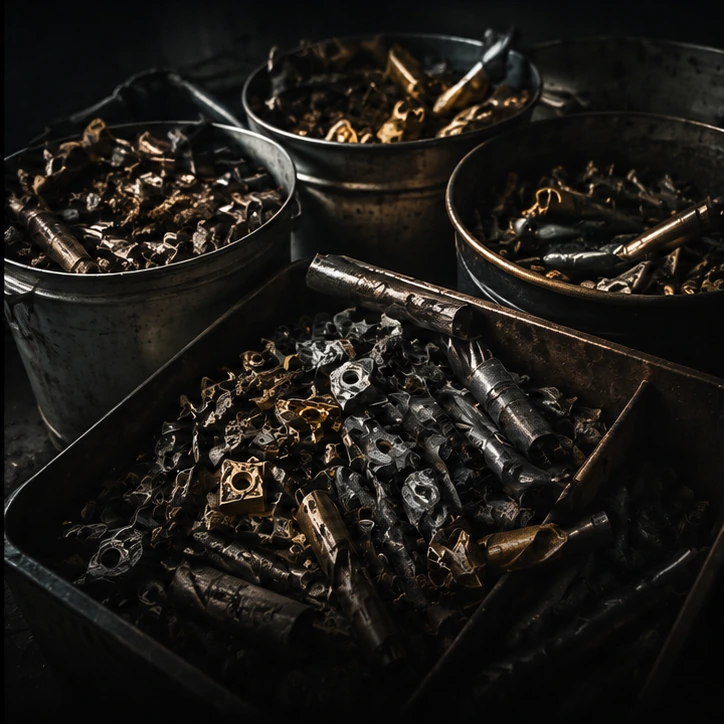
Keep solid carbide, inserts, brazed tooling, and grinding sludge apart. Each is priced differently, and mixed lots get priced at the lowest grade in the pile — which is money left on the table.
We buy carbide inserts, solid carbide tooling, and carbide scrap from Alaska machine shops and industrial maintenance teams — with a mail-in program built for the distance. Based in Rolling Meadows, Illinois, Ironcrest travels anywhere in the country for the right load.
Machine shops, mine maintenance shops, oil field machine shops, shipyards and marine repair shops, aviation maintenance, and fabrication shops across Alaska.
Clear photos of the tooling, insert boxes with grade markings, approximate weight, whether the material is solid carbide, inserts, brazed tooling, or sludge, and your Alaska city.
Alaska doesn’t look like a carbide state until you count the machine shops keeping its industries running. Here is where the material we review typically comes from.
Anchorage has the state’s biggest concentration of machine shops and job shops — oil field service, aviation, and general machining all chew through carbide. Fairbanks supports mining and North Slope service with maintenance shops that wear out tooling on hard materials every week.
Mines are steady producers. Red Dog, Fort Knox, Kensington, and Pogo run drill maintenance and repair shops where carbide inserts and drill tooling cycle constantly. On the North Slope, machine shops in Deadhorse and Prudhoe Bay support oil field equipment with the same heavy carbide use — cutting, threading, and rebuilding components that eat tooling for a living.
Marine repair is a quiet source. Shipyards and machine shops in Ketchikan, Seward, Kodiak, and Juneau rebuild prop shafts, winches, and processing equipment — all carbide work. Add aviation maintenance, fabrication shops in Wasilla and Kenai, and cannery repair shops in Dutch Harbor and Bristol Bay, and Alaska produces more carbide scrap than most people expect.
Carbide value lives in identification. A sorted lot photographs well, ships well, and reviews fast. Loose mixed piles do the opposite.
Keep solid carbide, inserts, brazed tooling, and grinding sludge apart. Each is priced differently, and mixed lots get priced at the lowest grade in the pile — which is money left on the table.
Insert boxes, original packaging, and stamped grade numbers speed identification. Loose inserts photograph best grouped by type — turning, milling, drilling — rather than loose in a bucket where nothing can be identified.
Remove steel shanks, holders, and high-speed steel where it’s practical. Grinding sludge goes in sealed containers, not loose bags. If you’re unsure, photograph it and ask — we’d rather sort it on our end than have you guess wrong.
Carbide is dense, so it ships cheap relative to its value — that’s what makes Alaska work. Send photos and weights first; we review and quote before anything moves. Then box it, palletize heavy lots, and ship parcel or LTL to our Chicago-area base in Rolling Meadows, Illinois. We have no physical location in Alaska, so mail-in and freight are how every Alaska lot reaches us.
On receipt we verify grade, weight, and form against the photos. Payment follows verification. For larger commercial lots — full shop cleanouts, mine maintenance inventories, oil field machine shop surplus — pickup coordination can be discussed, but the bar is high given the distance. Most Alaska sellers do better with a well-packed freight shipment.
We buy solid carbide inserts (new or used), end mills, drills, reamers, brazed carbide tooling, carbide burrs and saw tips, and grinding sludge. Send photos, grade markings when visible, approximate weight, and whether the material is solid, inserts, brazed, or sludge.
Yes. Ironcrest is based in Rolling Meadows, Illinois, with no physical location in Alaska. Alaska sellers use our mail-in program: photos and weights first, a quote, then parcel or LTL shipment to our Chicago-area base. Carbide is dense enough that shipping costs stay reasonable relative to its value.
Separate solid carbide, inserts, brazed tooling, and sludge — each is priced differently. Pull out steel shanks and high-speed steel where practical, keep insert boxes with grade markings, and put sludge in sealed containers. If you’re unsure, photograph it and ask.
Yes, we review carbide grinding sludge and dust. Keep it in sealed containers, estimate the weight, and note the source operation if you know it. Photos of the containers and a description are enough for an initial review.
Send photos, approximate weight, grade markings, and your Alaska city. We price each lot from current carbide market conditions and verified form and grade, then quote before anything ships. Public per-pound prices are not posted.
Have carbide tooling, inserts, or sludge to sell in Alaska? Send photos, weights, and grade details to [email protected] or call 312-880-8174 for today’s price.
Carbide inserts, solid tooling, or sludge anywhere in Alaska — Anchorage, Fairbanks, Juneau, Wasilla, Kenai, and beyond. Email photos and weights to [email protected] or call 312-880-8174.
Also buying in Alaska: Sell copper wire in Alaska · Sell electrical equipment in Alaska
New: Explore the Ironcrest Carbide Resource Center — grades, markets, identification guides, and interactive tools.
Photograph the material, nameplates and quantity, then send them through the quote form, by email or by phone.
We review what the material is, its condition and quantity, and whether it fits a direct purchase.
For qualifying material, we discuss a direct purchase offer and the next steps.