Send photos
Photograph the material, nameplates and quantity, then send them through the quote form, by email or by phone.
Copper in a metal jacket, copper in a tray, copper thick as your thumb. The industrial end of the wire stream — and some of its best value.
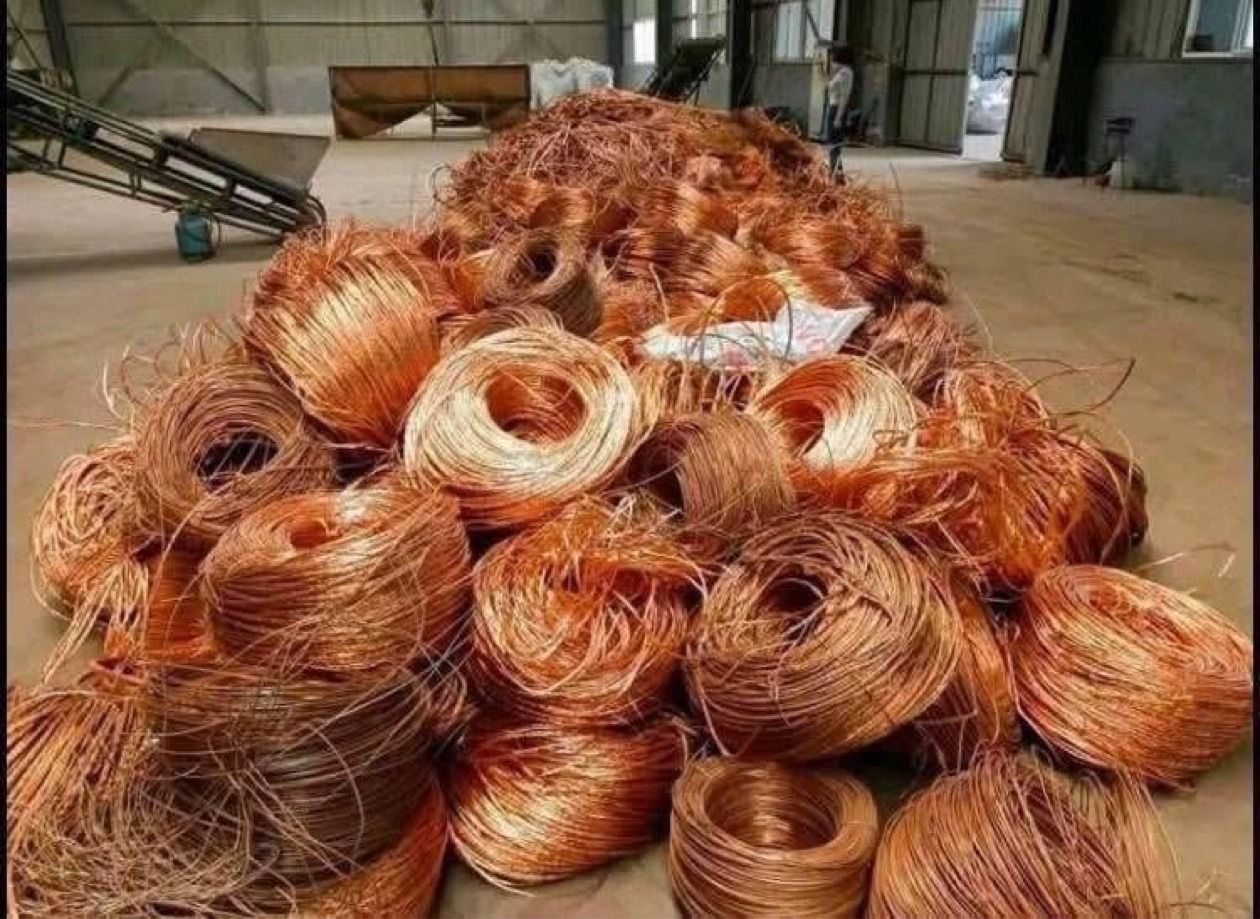
This is a real load Sonny bought — not a stock photo. Armored MC cable comes in off the truck mixed with stripped wire; the armor comes off before the copper gets graded.
MC (metal-clad), AC, and BX cable wrap insulated copper conductors in an interlocked steel or aluminum armor spiral — the standard for commercial wiring where conduit is not used, commonly 14 through 2 AWG. The armor is the catch: it is steel or aluminum weight that travels with your copper, so armored cable grades below the same conductors bare. Buyers purchase it as its own category (“insulated steel BX” appears by name in published yard taxonomies), and it sells — just sorted separately from unarmored wire.
Factories run tray cable and control cable — multi-conductor copper, typically 18 through 10 AWG, in tough jackets — through cable tray to motors, sensors, and control panels. Plant teardowns and control-panel upgrades produce it in long pulls. Like armored cable, it is a recognized category: sort it together, keep it dry, and sell it insulated.
At the top of the insulated stream sit large single-conductor feeders — 1/0 AWG through 1000 kcmil copper feeding services, switchgear, and industrial equipment. Thick copper, thin insulation, outstanding recovery: published yard grades name 500–750 MCM as its own premium category. Service upgrades, switchgear replacements, and plant closures are where feeders come from, and they are always worth a photograph.
Electricians (service upgrades, commercial fit-outs), demolition crews stripping buildings (see the demolition copper guide), plant maintenance departments, and anyone decommissioning industrial equipment. Armored cable and feeders are contractor-grade scrap — the sellers who handle it tend to have it repeatedly, which is exactly the relationship a national buyer is built for.
Photograph what you have — the wire, any jacket markings, and the overall quantity — and send it to Ironcrest for today’s offer. We buy nationally and coordinate pickup from your site.
Sell your copper to Ironcrest → | Call or text 312-880-8174 | Send photos →
See also: Demolition copper recovery guide | Should I strip this wire? | Copper wire grades guide (canonical)
Yes — as its own armored-cable category. The steel or aluminum armor lowers the grade versus bare conductors, but the copper inside is real and buyers purchase armored cable as a matter of course. Sort it separately from unarmored wire.
It does, because armor is non-copper weight traveling with the wire. That is why armored cable is graded as its own category rather than with bare or insulated copper. Removing armor yourself is rarely worth the labor — sell it as armored cable.
Multi-conductor copper cable run in industrial cable tray to feed motors, sensors, and control panels — typically 18 through 10 AWG. Factories, teardowns, and control-panel upgrades are the sources.
Copper per foot. Feeders from 1/0 AWG to 1000 kcmil are thick copper under thin insulation — among the highest-recovery insulated wire made. Yards even name 500–750 MCM as its own premium grade.
Usually not — the labor exceeds the gain, and buyers already price armored cable as armored cable. Coil it, keep it dry, and sell it in its own pile.
Armored cable, tray cable, and large feeders are the contractor’s scrap stream — sorted by category and sold to a buyer who knows the grades, they pay like the serious copper they are.
New: Explore the Ironcrest Copper Resource Center — grades, markets, identification guides, and interactive tools.
Photograph the material, nameplates and quantity, then send them through the quote form, by email or by phone.
We review what the material is, its condition and quantity, and whether it fits a direct purchase.
For qualifying material, we discuss a direct purchase offer and the next steps.