Send photos
Drum photos, labels, fullness, and what you grind — by text, quote form, or email.
Two drums of sludge from the same grinder can settle at very different values — and the difference is entirely in how the shop handled the material. I'm Sonny, I buy carbide grinding sludge for top money, and these are the seven shop-floor habits that put the most money in your pocket.
 FIELD GUIDE
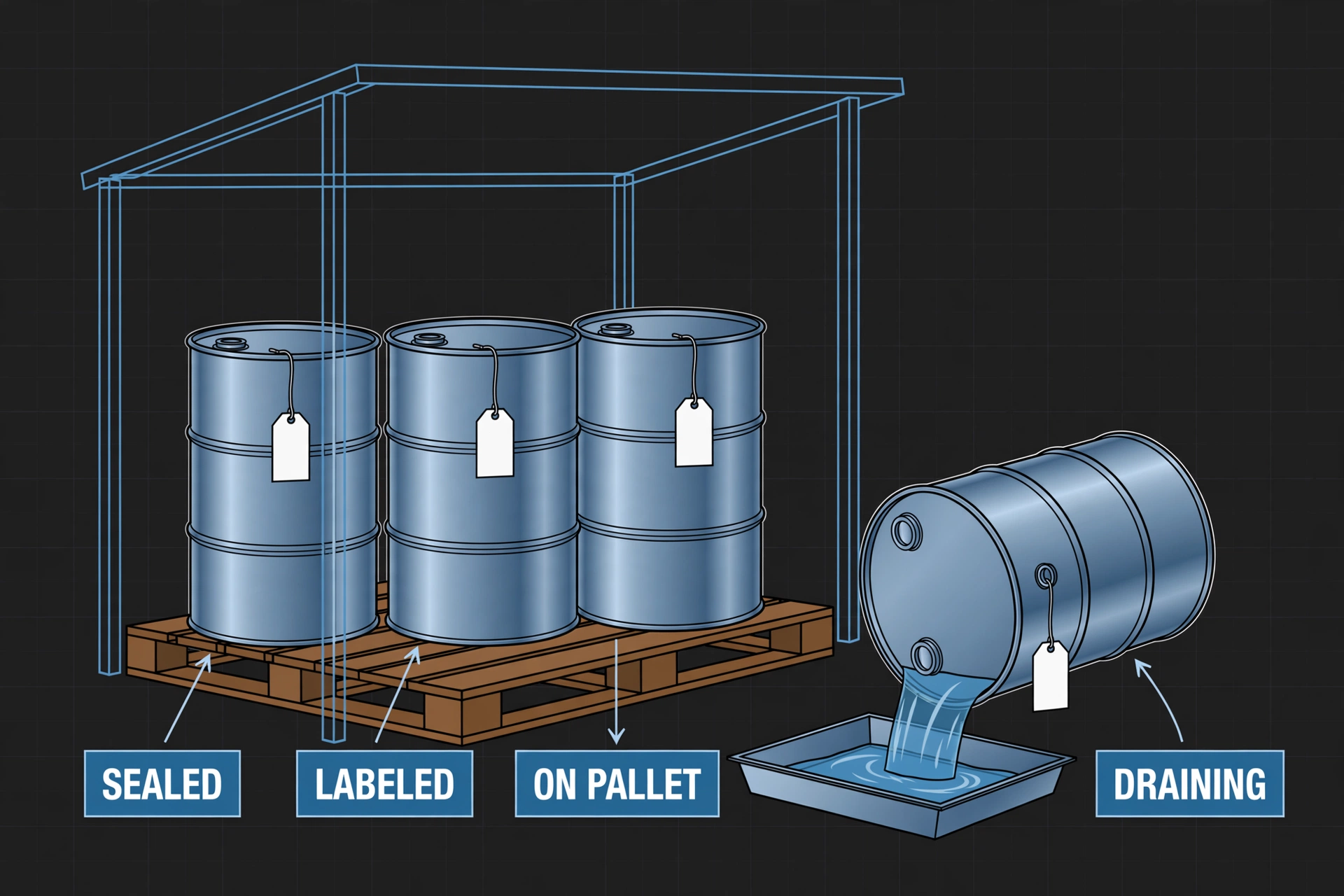
Coolant is weight you do not get paid for. When a drum is full, let it sit undisturbed so the carbide settles, then carefully decant or pump the clear liquid off the top before sealing it. A drum that started half liquid can lose a third of its weight in free coolant — and every gallon you pour off is a gallon the dryer does not have to bake off later. Tilt the drum slightly while it settles so the liquid pools at one side of the rim where it is easy to draw off. This one habit moves your settlement more than any other.
This is the highest-value habit in the shop. Grinding steel and carbide into the same drum dilutes the tungsten content across the entire lot, and the assay will show exactly how diluted it is. Dedicate drums to carbide-only grinding — mark them clearly, put them at the carbide grinders, and make it a shop rule. A carbide-only drum assays dramatically higher than a mixed drum from the same machines. If you only change one thing after reading this article, change this.
Open drums collect rainwater outside, mop water inside, airborne dust, and whatever the forklift kicks up. Every contaminant that lands in an open drum lowers the assay. Sealed drums with gasket lids also stop evaporation from concentrating the wrong things and keep the sludge from skinning over into a crust that is hard to sample. A two-dollar lid protects a thousand-dollar drum.
A strip of tape and a marker: the date it was sealed, which grinder or operation filled it, and whether it is carbide-only or mixed. Labeled drums let me quote you accurately from photos, and they let you track which operations produce your best material. Unlabeled mystery drums get conservative quotes, because I have to assume the worst. Five seconds with a marker is worth real money.
Rags, floor sweepings, cigarette butts, food wrappers, random hardware, used oil from other machines — I have seen all of it in sludge drums, and every piece of it contaminates the sample and costs the shop money. Make the rule explicit and put a sign on the drum: grinding sludge only. One careless toss can drag the assay of a full drum.
When you clean a coolant sump, the material that comes out is some of the best sludge-form carbide there is — years of fine particles settled into a dense layer. Do not mix sump cleanout material into your regular grinding drums. Keep it in its own labeled drums, because it often assays higher than day-to-day grinding sludge, and mixing it in just averages a great lot down into an ordinary one.
Upright drums do not leak at the rim. Under cover they do not collect rainwater. On pallets they are ready for the freight truck the day you call me. A palletized, labeled, sealed set of drums photographs well, quotes fast, and loads in minutes — which is exactly how you want your inventory to look when it is time to turn it into cash. If you generate sludge continuously, ask me about bin and pickup options: fresh drums on a rotation with the full ones picked up, so the shop never thinks about it.
Grinding sludge contains used coolant and fine metal particles. Wear gloves and eye protection when handling drums, keep them sealed and upright, and store them away from drains and waterways. Spent coolant is regulated in most states — keeping it contained in proper drums is not just good for the assay, it keeps you compliant. If a drum ever leaks, contain it, clean it up, and call your coolant service company for guidance.
Already have drums sitting? Text photos to 312-880-8174 — tell me how many, how full, and what you grind. I will tell you what they are worth and how to make the next ones worth more.
Ironcrest's carbide sludge buying program →
Well-kept drums quote higher and settle cleaner. Photos of your drums, labels, fullness, and the grinding operation behind them get you a written custom quote — with freight arranged on multi-drum lots and an itemized settlement after drying and assay.
For solid carbide tooling with a published price: see current scrap carbide prices per pound.
Drum photos, labels, fullness, and what you grind — by text, quote form, or email.
A written number based on your material, handling, and the current tungsten market.
Itemized settlement after drying and assay, payment within 24 hours.
Send a photo, get a fast, free no-obligation quote — or call 312-880-8174.