Send photos
Photograph the material, nameplates and quantity, then text them to 312-880-8174 or call.
Some copper cable is built from hundreds of strands, each about as thin as a human hair. The trade calls it hair wire — and it grades by its own rules. Here's where it's found, why it never makes bare bright, and why one handful can drag a whole bright load down a grade.
These are real loads Sonny bought — not stock photos. Hair wire comes in as coils, sacks, and bins of fine-stranded wire — strands thin as hair, bright and flexible.
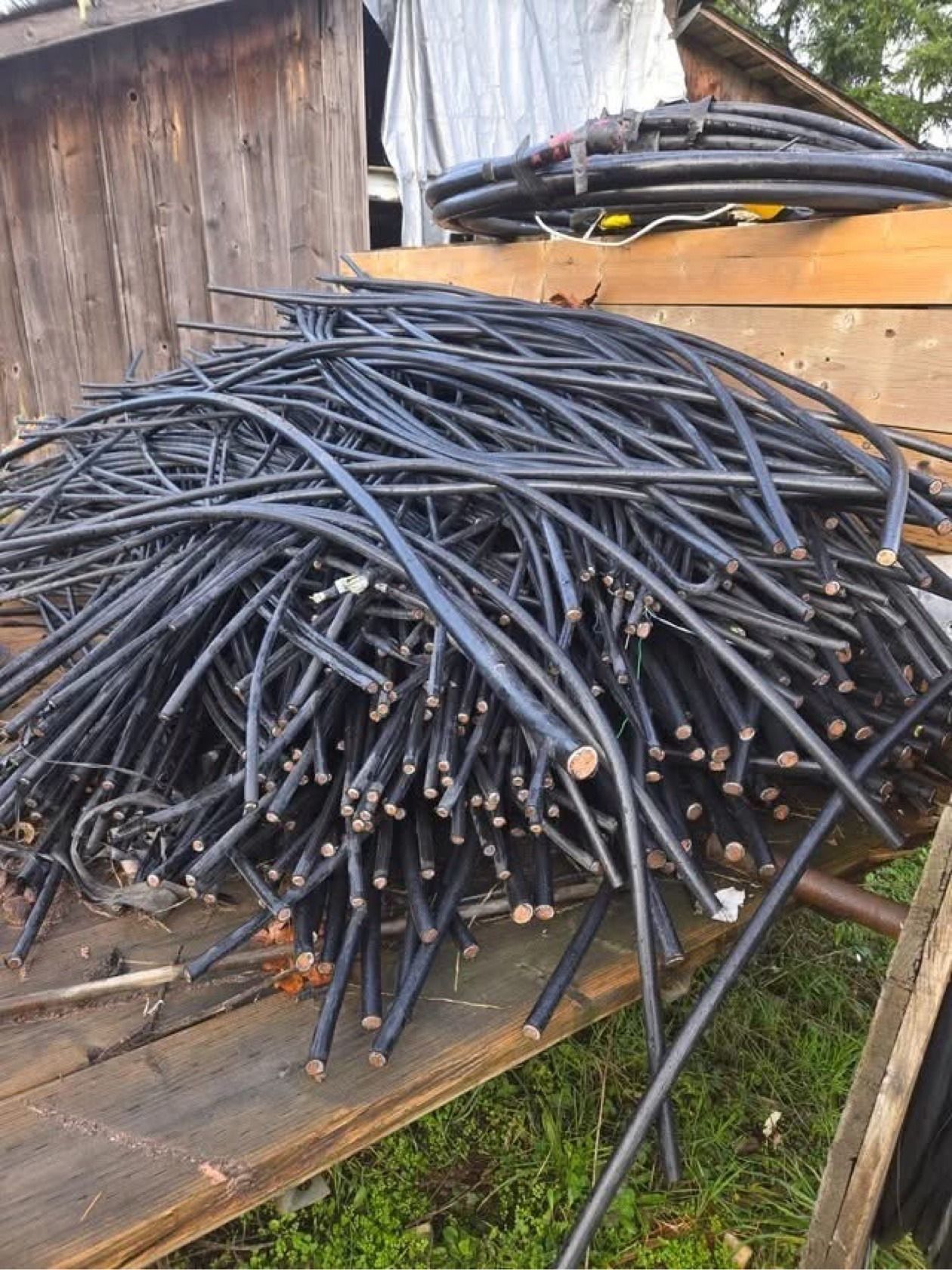
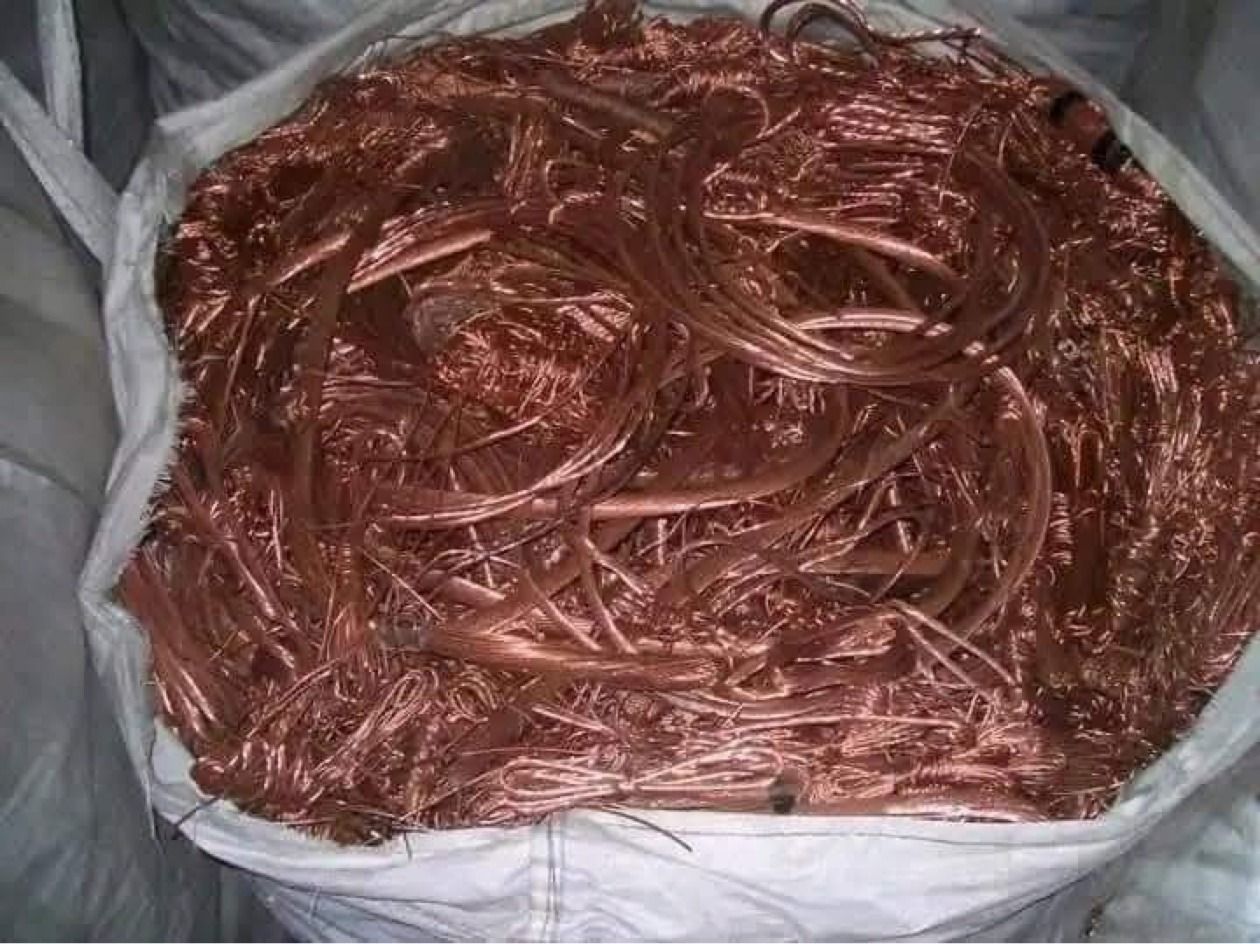
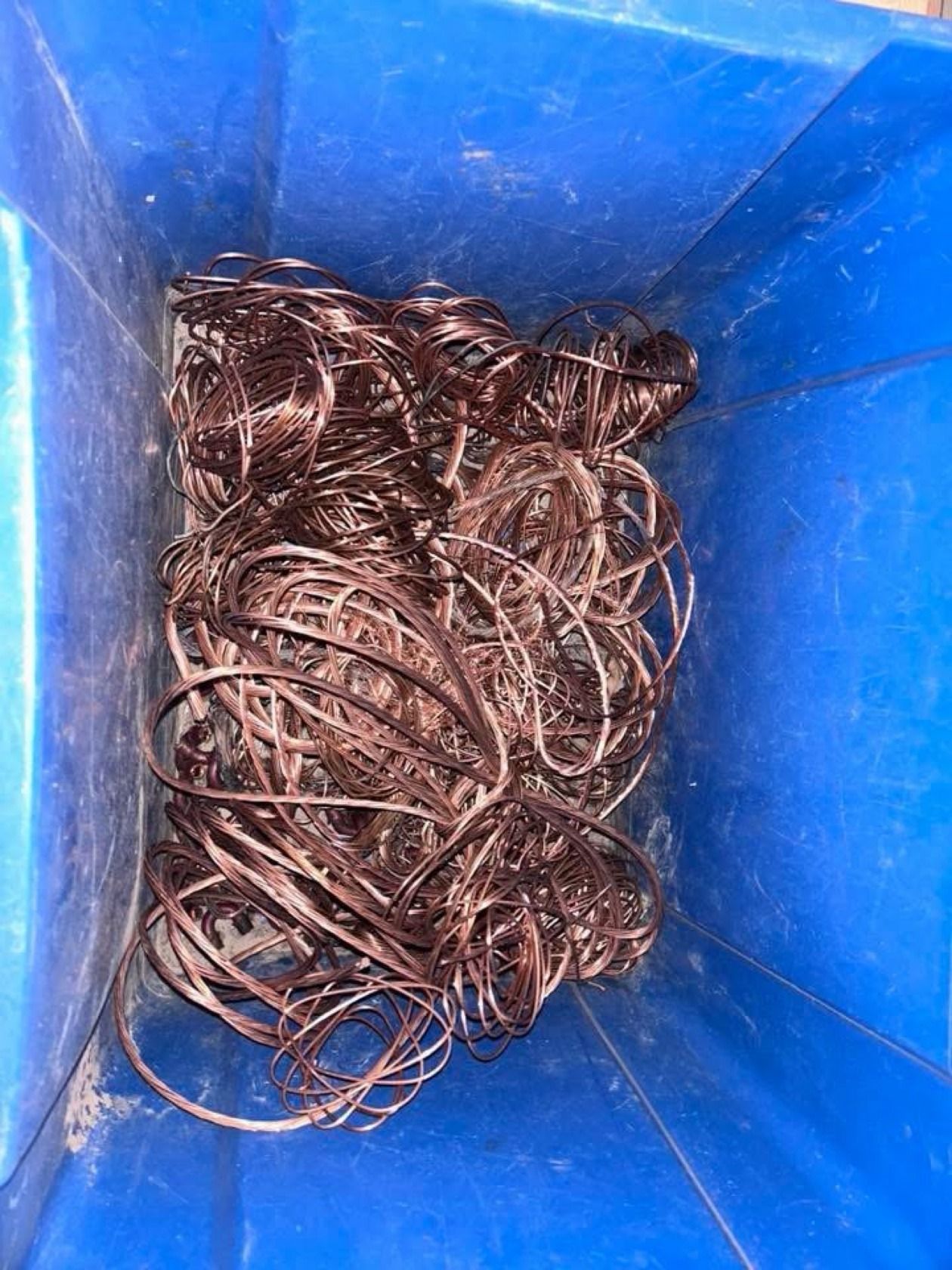
Hair wire is the trade's nickname for copper cable built from very fine strands — individual strands about as thin as a human hair. The formal construction is called Class K or Class M rope-lay stranding: instead of a few thick strands, the conductor is rope-laid from hundreds of hair-thin ones, and a single 4/0 welding cable can carry 1,000+ strands. All that flex is the point — it's what makes the cable survive being dragged, coiled, and bent all day. (Filed under the copper wire dictionary.)
Hair wire shows up wherever flexibility matters: welding lead and welding cable, DLO cable (diesel locomotive cable — the heavy, flexible cable built for locomotives, now common in industrial power work), battery cable, portable power cords, and inside small motors, small transformers, and appliance solenoids. If the copper inside feels soft and ropey and the strands are too fine to count, you're holding hair wire. See the welding, battery & DLO cable guide.
Here's the part that surprises people: even stripped perfectly clean and shiny, hair wire never makes Bare Bright. The top grade (ISRI's Barley) is written for solid, heavier wire — fine-stranded cable is out by definition. Clean stripped hair wire typically grades as #1 copper, and most everyday lots land in #2 copper, the grade for miscellaneous copper wire. That's not a penalty for dirty wire — it's the trade's standing read on fine-stranded cable. #1 copper wire · #2 copper wire
Buyers have a plain reason for the lower grade: fine strands burn up in the furnace. When copper is melted for refining, hair-thin strands oxidize and some of the metal is lost up the flue before it ever becomes new copper — “some is lost out the flue,” as one buyer put it. Thick wire survives the melt nearly whole; hair wire doesn't. The grade reflects the real recovery, not the shine.
This is the expensive mistake: one handful of hair wire mixed into a load of bright, solid copper can get the whole load re-graded down to #1 or #2. The spec's rule of thumb is that a single excluded item can pull an entire lot down — so the fix is simple: strip it, coil it, and keep it in its own pile, away from your bright wire. Sorted loads grade higher. Mixed loads don't.
Trade slang for copper cable made from very fine strands — each about as thin as a human hair. It's built as Class K or Class M rope-lay stranding (hundreds of strands), and it's what makes welding lead, DLO cable, and battery cable so flexible.
No — and this is the most common misunderstanding. Bare bright is for solid, heavier-gauge wire; fine-stranded hair wire is excluded from the top grade no matter how clean it is. It grades #1 or #2 depending on condition.
Welding lead and cable, DLO (diesel locomotive) cable, battery cable, portable power cords, small motors, small transformers, and appliance solenoids — anywhere cable needs to flex constantly.
Melt loss. Hair-thin strands oxidize in the furnace and some copper is lost up the flue, so the real recovery is lower than solid wire of the same weight. The grade reflects that.
Don't. A little fine-stranded wire mixed into a bright load can drag the whole load down to #1 or #2. Keep hair wire stripped, coiled, and in its own pile.
Text a photo of your copper to Sonny at 312-880-8174 — or call 312-880-8174 for today's number.
Prices move with the market daily. Text a photo of your copper and get today's number — quoted against the market, honored at pickup.
Photograph the material, nameplates and quantity, then text them to 312-880-8174 or call.
We review what the material is, its condition and quantity, and whether it fits a direct purchase.
For qualifying material, we discuss a direct purchase offer and the next steps.