Send photos
Photograph the material, nameplates and quantity, then text them to 312-880-8174 or call.
One step under bare bright sits #1 copper — still clean, pure copper, just not shiny enough (or not thick enough) for the top shelf. Here's what the trade's Berry spec requires, what it looks like in a real pile, and where it comes from.
These are real loads Sonny bought — not stock photos. #1 copper comes in as clean stripped wire, nests, cuttings, and clean unalloyed fittings.
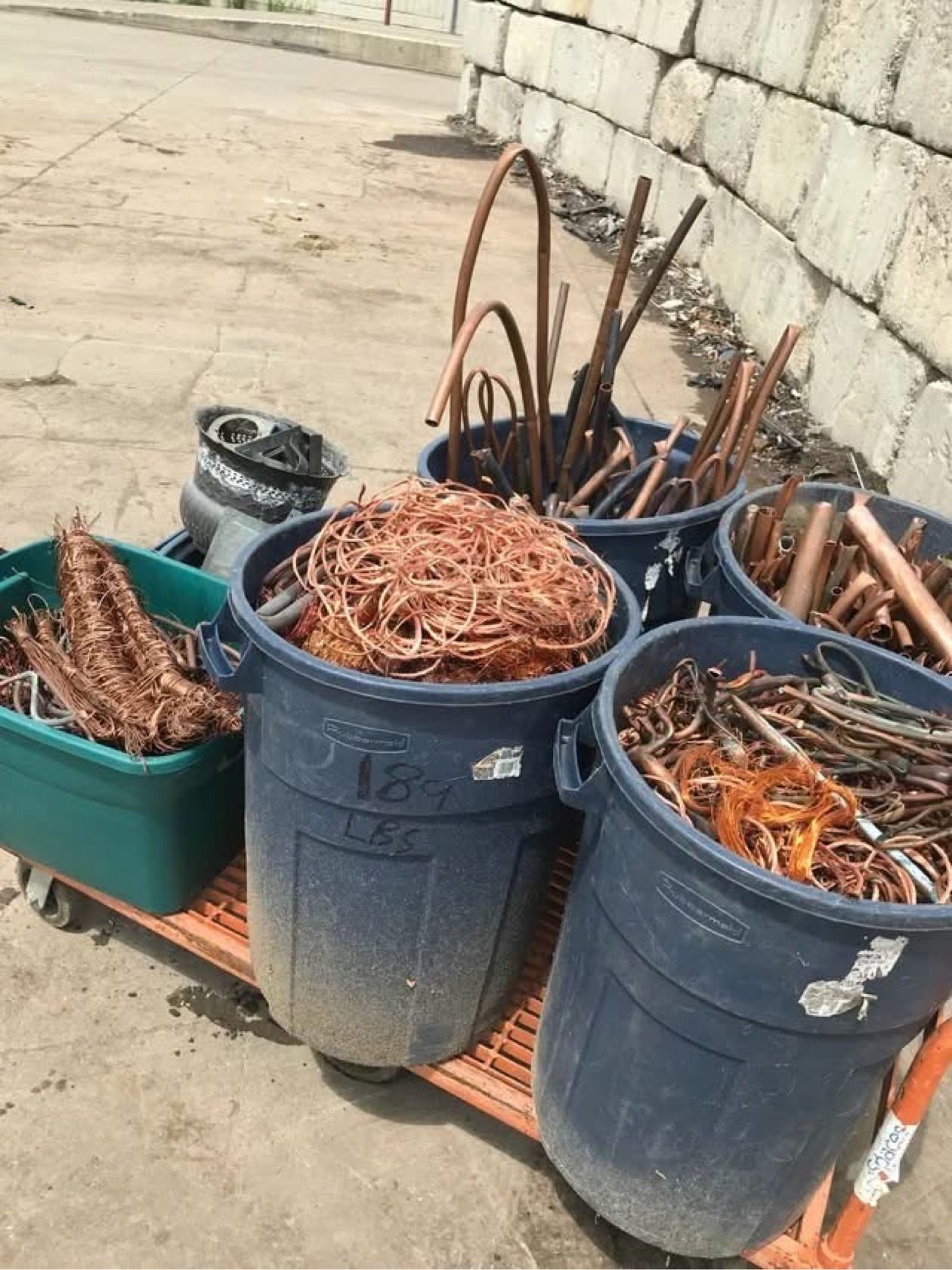
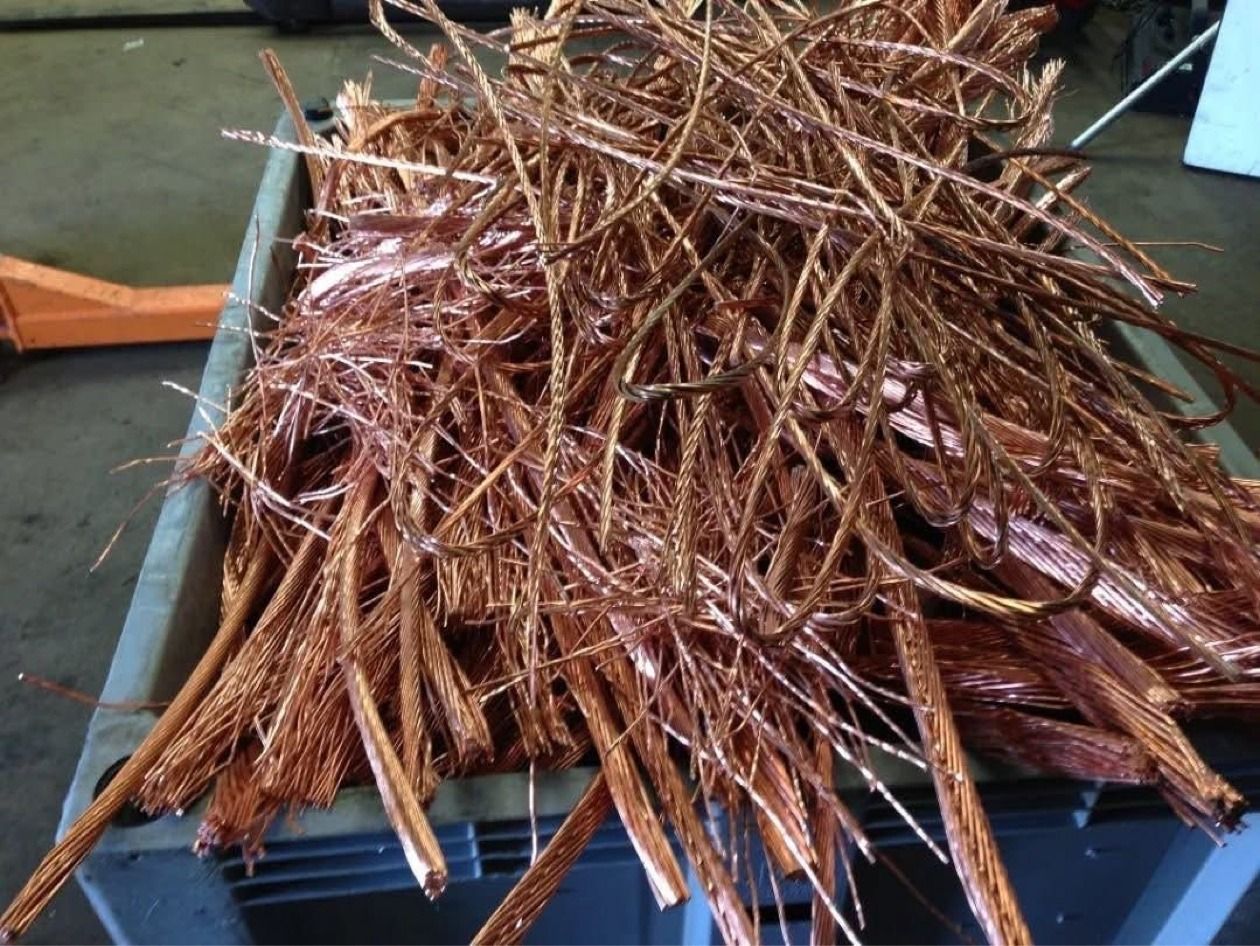
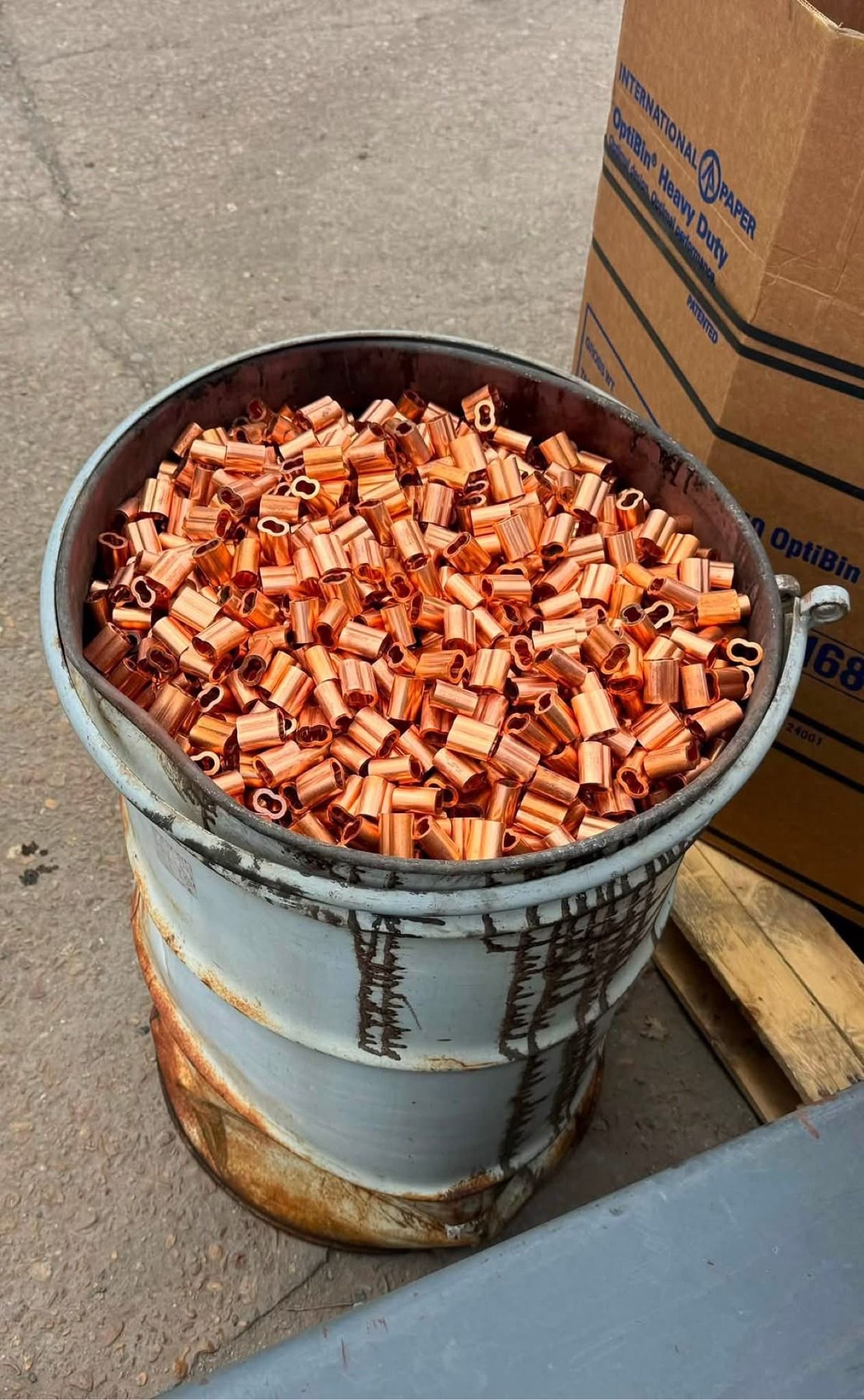
The trade code name for #1 copper wire is Berry: clean, untinned, uncoated, unalloyed copper wire and cable, free of brittle burnt wire. Note what the spec does not require: brightness. Tarnished or dulled-but-clean wire lands here by design. So do bare-bright rejects — stripped welding cable, for example, is bright but far too fine-stranded for Barley, and falls to #1. The test is cleanliness, not shine.
Stripped cable with a dulled, weathered finish. Heavy wire gone brown from sitting in a yard. Clean busbar drops with a patina. And bright, fine-stranded wire — welding lead, battery cable, portable power cord — stripped clean. It's a mixed-looking pile, but everything in it shares one thing: clean, uncoated, unalloyed copper with nothing burnt or brittle in the mix.
Demo tear-outs and panel upgrades (weathered but clean wire), electrician cutoffs and scrap ends, welding shops (spent leads), and motor and generator tear-down wire that comes out clean. Anywhere copper worked hard and came out dull but honest, #1 is the likely grade.
Three tests separate them: is it shiny? — dull wire stops at #1. Is it thick enough? — about 12 AWG and larger, in yard practice. Is it coarse-stranded? — hair-fine strands fail even when bright. Fail any one test and bright-looking wire steps down a rung. That stepping-down is exactly why sorting pays: the shiny thick stuff in one pile, the dull and fine stuff in another. See what qualifies as bare bright for the top-shelf test.
#1 earns its grade by what it isn't: no burnt or brittle wire, no solder, no tinning or plating, no oil, and no hardware left attached. Cut the ends and clips off, keep the soldered and painted pieces in their own pile, and your clean wire grades like it should. One contaminated handful can drag a whole load down to #2 copper — sort before you haul.
Copper Wire Dictionary — the full hub of grade-by-grade guides. Bare Bright Copper — the top-shelf test your wire just missed. #2 Copper Wire — the mixed grade below #1. Copper Grades Explained — the whole ladder in one place.
Not always — the spec covers wire and cable. But heavily jacketed cable gets bought on recovery instead, as insulated copper wire. If there's bare, clean copper showing, #1 is in play.
Because of the strands. Welding cable uses hundreds of hair-fine strands, and the bare-bright spec requires wire thick enough that fine-stranded cable never qualifies — even stripped, bright, and spotless. Buyers call it hair wire, and it lands in #1 (or #2) because fine strands burn up in the melt.
Light tarnish is expected in #1 — that's what the grade is for. Heavy green corrosion or pitting pushes wire down to #2.
It's one step down the ladder, not a different material — still clean, unalloyed copper that melts clean. It grades honestly and sells strong.
Text a photo of your copper to Sonny at 312-880-8174 — or call 312-880-8174 for today's number.
Prices move with the market daily. Text a photo of your copper and get today's number — quoted against the market, honored at pickup. Same-day pickup in Chicago — and I'll travel nationwide for the right load.
Photograph the material, nameplates and quantity, then text them to 312-880-8174 or call.
We review what the material is, its condition and quantity, and whether it fits a direct purchase.
For qualifying material, we discuss a direct purchase offer and the next steps.