Send photos
Photograph the material, nameplates and quantity, then text them to 312-880-8174 or call.
That worn insert in your bin is not dead — it is raw material. Tungsten carbide is one of the most recycled industrial materials on earth, and the path from your scrap bin back to a brand-new cutting tool is shorter and cleverer than most sellers expect. Here is the plain-language version of where your carbide goes after you sell it.
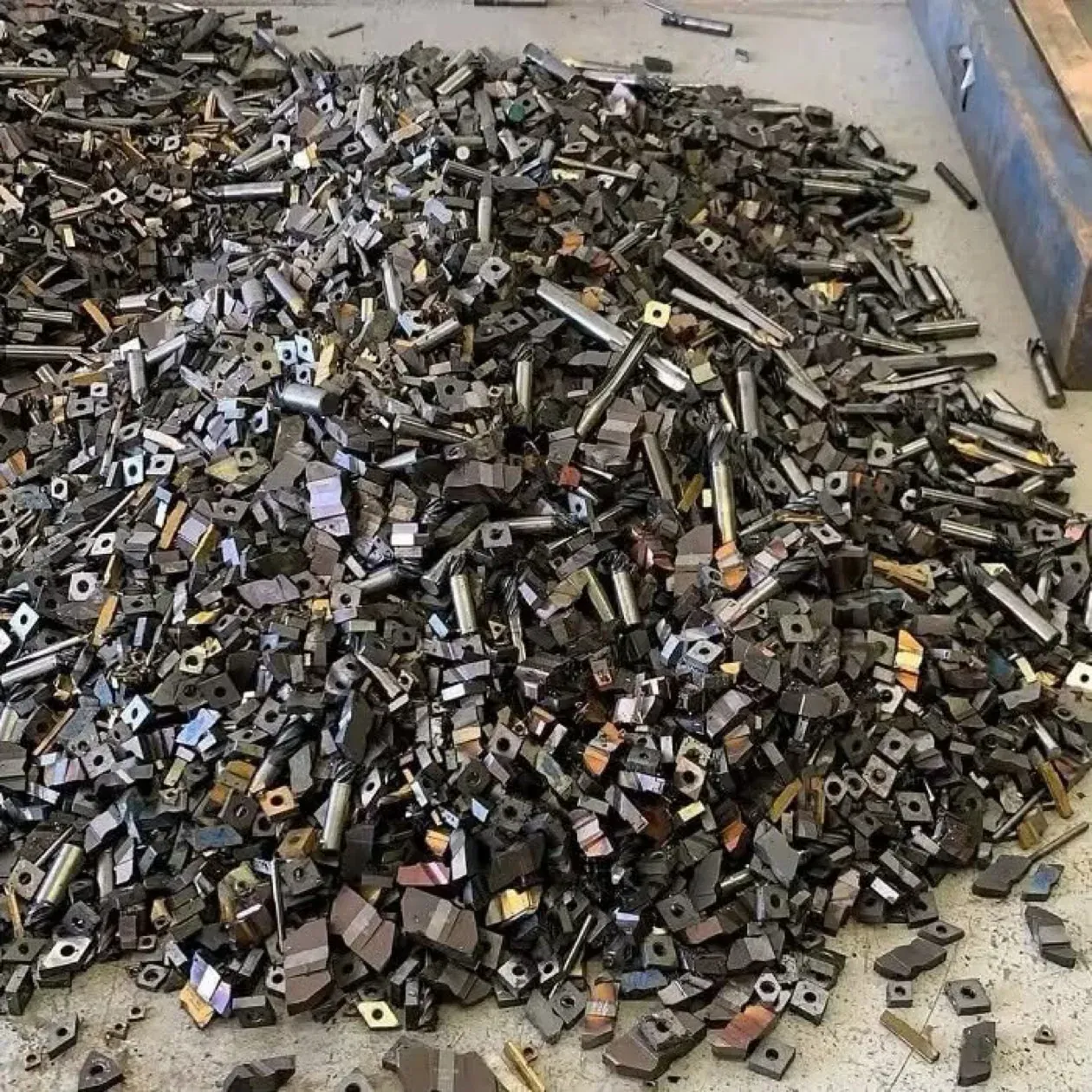
Tungsten carbide is tungsten carbide powder glued together with a cobalt binder. When a tool wears out, the tungsten carbide grains are still perfectly good — they just need the old glue dissolved and new glue mixed in. That is the whole game: recycling carbide means recovering the powder, not melting the tool down. (Carbide does not melt and recast the way copper does — it is pressed and sintered, baked from powder.)
The workhorse of carbide recycling is the zinc process — called direct recycling because the carbide powder goes straight back into making new carbide. Here is the plain version: your scrap is cleaned and sorted, then heated with zinc metal. The zinc soaks into the carbide and bonds with the cobalt binder. Then the temperature goes up and the zinc — carrying the cobalt with it — boils off as vapor, leaving the tungsten carbide grains behind as powder. That powder is mixed with fresh binder, pressed into new tool shapes, and sintered (baked hot) into new inserts, end mills, and dies.
Some scrap takes the longer road: the chemical route. Carbide is dissolved with acids or roasted, and the tungsten is refined into intermediate compounds before becoming powder again. It is more energy and chemistry, but it handles dirty and mixed scrap that the direct route cannot. Either way, the tungsten comes back — which is exactly why buyers pay for worn carbide.
Three things worth knowing. Sorting pays — the zinc process works best on clean, sorted carbide, which is why sorted lots earn better offers. Worn is normal — recyclers expect worn tools; the value is in the tungsten, not the tool's remaining life. It stays domestic — under the 2026 federal tungsten export rule, US carbide scrap stays in the US market, feeding domestic recyclers. Your worn inserts are feeding American tooling production, not a container ship.
The Tungsten Export Ban, 2026 — why US carbide scrap stays domestic. Why Carbide Prices Are High — tungsten's value, explained. Sorting Carbide Scrap — the step that pays for itself.
No. Carbide is pressed from powder and baked (sintered), not melted and cast. Recycling recovers the tungsten carbide powder itself — through the zinc process or the chemical route — and that powder becomes new tools.
Direct recycling works best on clean, known carbide. A sorted lot goes straight through the zinc process efficiently; a mixed or contaminated lot needs more handling. That is why sorted lots earn better offers.
Yes — sludge and swarf (the grinding dust and chips from making carbide tools) are recycled, usually through the chemical route since they are fine powder mixed with coolant. They sit in the lowest value tier because of the extra processing. Full page: Selling Carbide Sludge & Swarf.
Into the domestic recycling stream — processors that turn scrap carbide back into powder for new tooling. Under the 2026 federal tungsten export rule, US tungsten scrap stays in the US market.
Prices move with the market daily. Text a photo of your carbide and get today's number — quoted against the market, honored at pickup. Same-day pickup in Chicago — and I'll travel nationwide for the right load.
Photograph the material, nameplates and quantity, then text them to 312-880-8174 or call.
We review what the material is, its condition and quantity, and whether it fits a direct purchase.
For qualifying material, we discuss a direct purchase offer and the next steps.