Send photos
Photograph the material, nameplates and quantity, then text them to 312-880-8174 or call.
Most wire arrives wearing a jacket — and yards don't price the jacket. Here's how #1 insulated (Druid) and #2 insulated (Droid) get graded on recovery percentage, and why stripping it yourself is a losing trade.
These are real loads Sonny bought — not stock photos. Insulated wire comes in as cable coils, cutoffs, and gaylords — bought on copper recovery, never stripped by the seller.
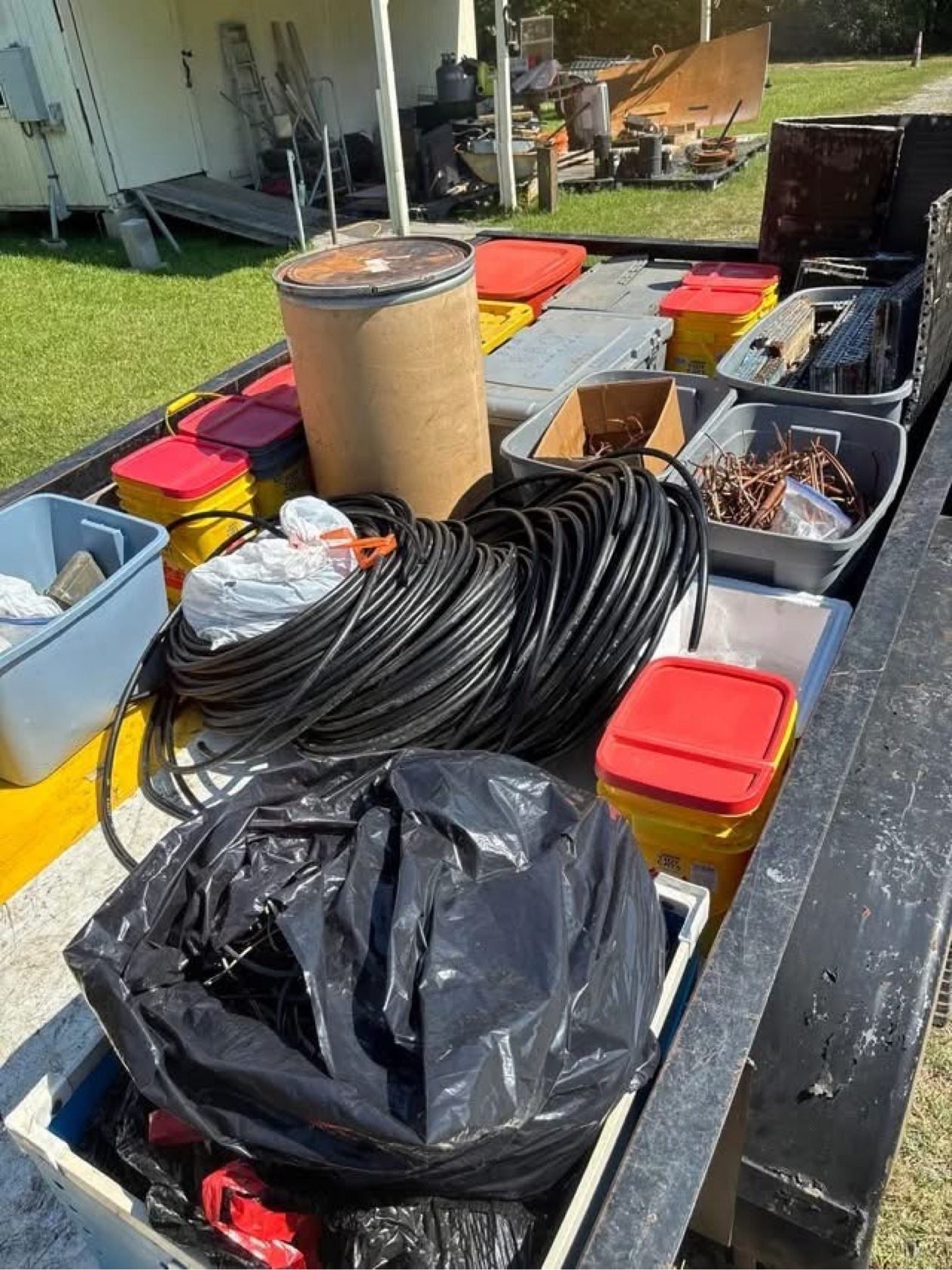
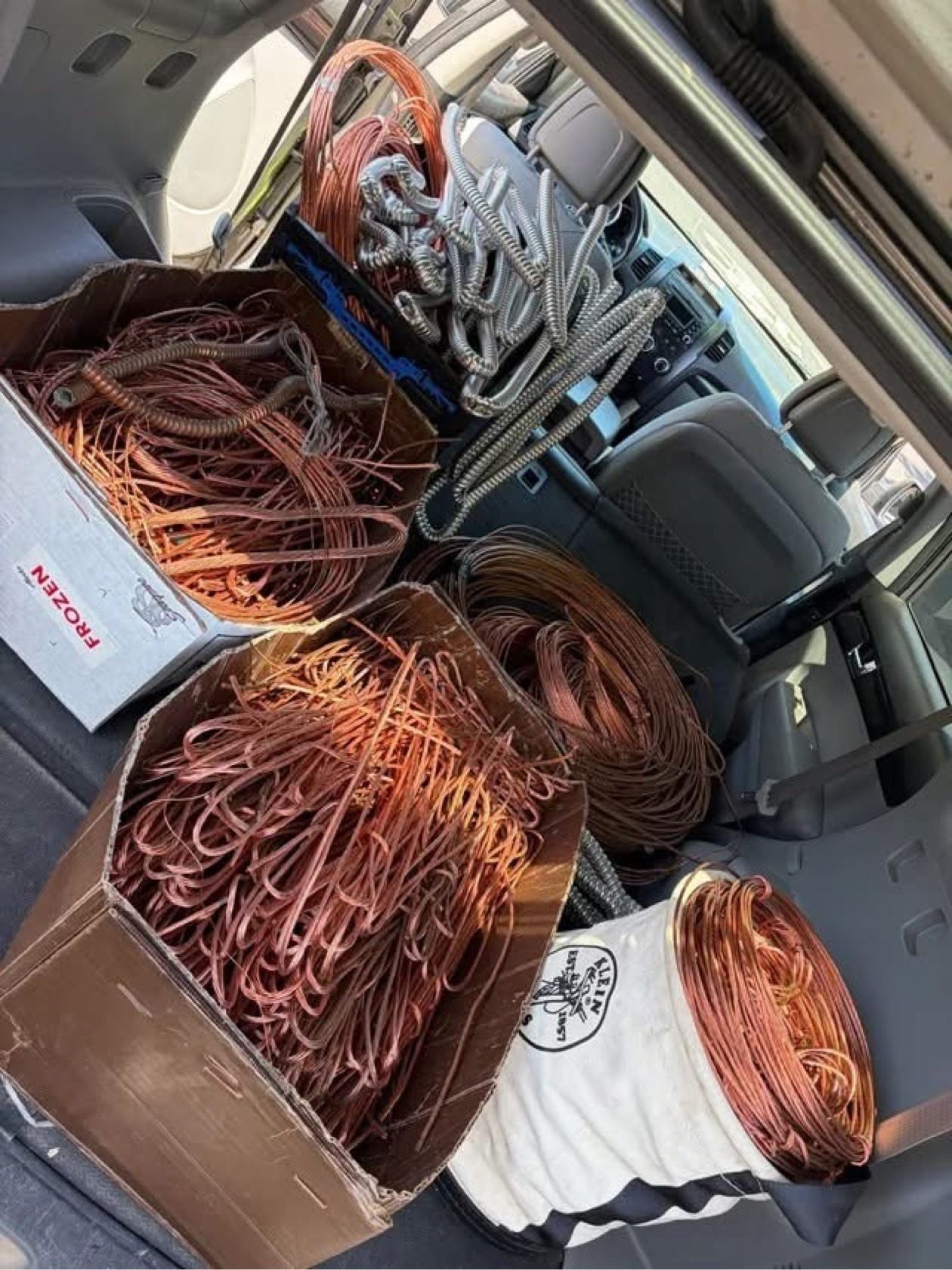
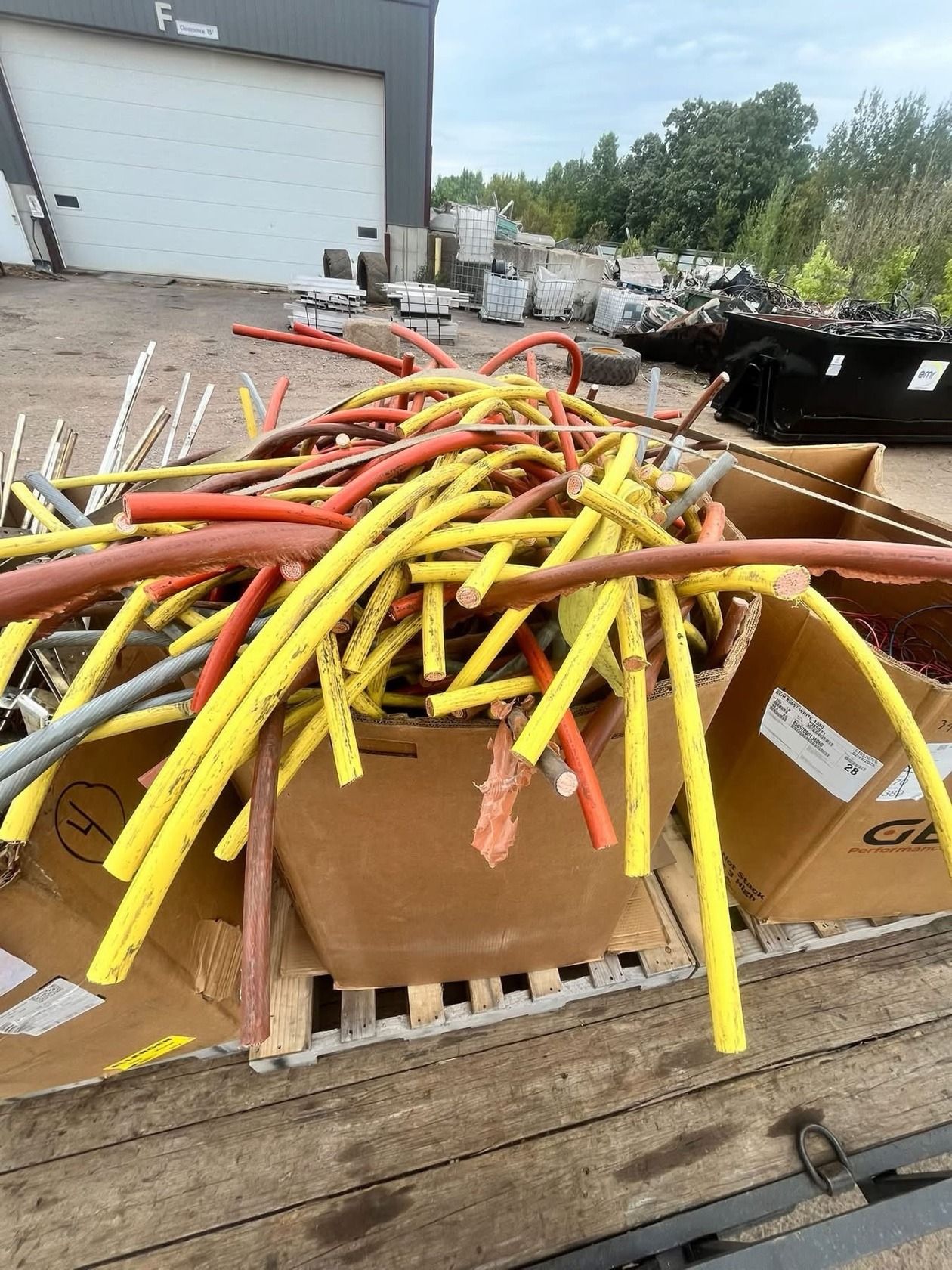
Insulated wire isn't priced on what it weighs — it's priced on how much copper is inside the jacket. "Recovery" is simply that percentage: a wire with 70% recovery is 70% copper and 30% insulation by weight. Thick copper under a thin jacket recovers high; fine strands buried in heavy jacketing recover low. The buyer pays for the copper, not the plastic. See how copper scrap pricing works for the full picture.
The trade code name for #1 insulated copper wire is Druid: No. 1 bare copper wire (the Barley standard — bare, uncoated, unalloyed), not smaller than 16 B&S gauge unless buyer and seller agree, with various types of insulation. Yard shorthand puts #1 insulated at about 75%+ recovery — ISRI itself sets no fixed percentage; it's bought on sample or recovery. Typical Druid: heavy THHN and building wire, Romex and branch-circuit cable, service-entrance cable, thick feeder cable stripped from panels and switchgear.
The code name for #2 insulated copper wire is Droid: No. 2 copper wire (the Birch standard) with various types of insulation, sold on a sample or recovery basis — jelly-wire acceptance is by agreement. (Note: Maize is not #2 insulated — that's the code for nickel-silver clippings. Droid is the current code.) Yard shorthand puts #2 insulated at about 50–69% recovery. Typical Droid: appliance and extension cords, low-voltage and thermostat wire, thin-jacketed small wire, and heavily jacketed or double-insulated cable where the jacket outweighs the copper inside.
Nobody guesses at insulated wire — the buyer cuts a sample, weighs the copper out of it, or works from known recovery figures for common cable types. Big feeders test high: copper is the bulk of the weight (a 500 kcmil conductor runs roughly 95% copper by weight even in XHHW-2 insulation). That's also why photos work so well: send the wire as-is, name the cable type if you know it, and the grade gets set from there.
Stripping is slow, dangerous work — knives slip, and hours of stripping buy you nothing, because insulated wire is priced on its recovery either way. The grade was set the day the cable was manufactured: stripping doesn't turn Droid into Druid, it just costs you an afternoon and maybe a fingertip. Send it as-is, get graded honestly. For the full case against the stripper, see should I strip copper wire.
Copper Wire Dictionary — the full hub of grade-by-grade guides. Copper Grades Explained — the whole ladder in one place. Should I Strip Copper Wire — why the answer is no. Bare Bright Copper — what the copper inside is graded against once stripped.
Insulated wire sells on what's inside the jacket — not the jacket. Spin a cross-section with the insulation pulled back and see the copper the grade is really about.
A cable cross-section with the jacket pulled back — the copper inside is what insulated wire sells on. Drag to spin, pinch or scroll to zoom.
The copper inside. Druid (#1 insulated) is #1-grade bare copper with insulation — about 75%+ recovery in yard shorthand. Droid (#2 insulated) is #2-grade copper with insulation — about 50–69%. ISRI itself sets no fixed percentages; both are bought on sample or recovery.
No. It's priced on recovery percentage — how much copper is inside the jacket — and stripping is slow, dangerous work. Send a photo as-is; I'll grade it from there.
Jelly wire (grease-filled telecom or utility cable) is accepted by agreement — it doesn't fit neatly into either code. Send a photo and ask.
Recovery. A heavy 500 kcmil feeder can test around 95% copper by weight, while thin appliance cords might recover only half that. Same jacket concept, wildly different copper inside — and the grade follows the copper.
Text a photo of your copper to Sonny at 312-880-8174 — or call 312-880-8174 for today's number.
Prices move with the market daily. Text a photo of your copper and get today's number — quoted against the market, honored at pickup. Same-day pickup in Chicago — and I'll travel nationwide for the right load.
Photograph the material, nameplates and quantity, then text them to 312-880-8174 or call.
We review what the material is, its condition and quantity, and whether it fits a direct purchase.
For qualifying material, we discuss a direct purchase offer and the next steps.