A few pounds are welcome
You do not need a full drum to contact Ironcrest. Send photos of inserts, end mills, drills, rods, dies, wear parts or old machinist tooling with an approximate weight. Small clean lots can often be handled by mail-in.
Machine shops, tool rooms, precision manufacturers and aerospace shops across Massachusetts can send Ironcrest photos of carbide inserts, end mills, drills, dies and other tungsten-carbide material for evaluation.
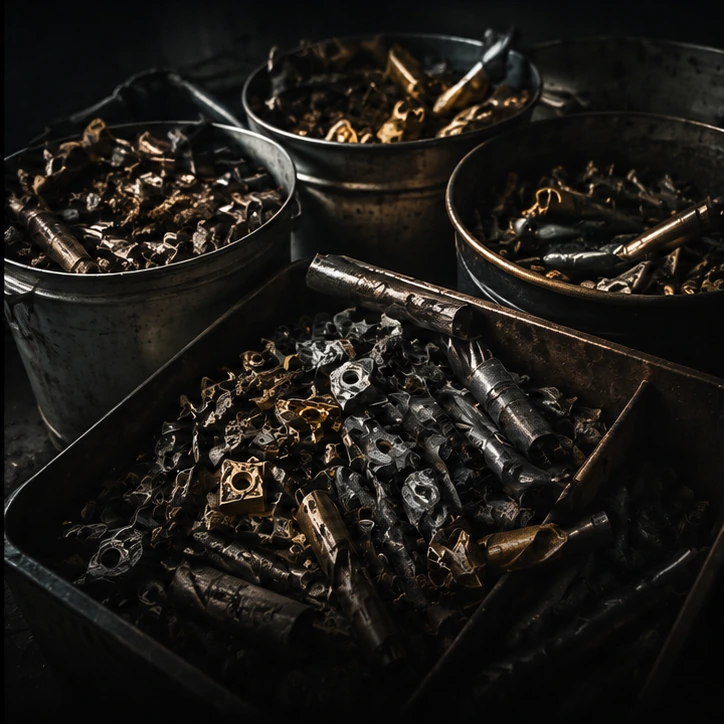
Precision machine shops, CNC facilities, aerospace and defense shops, medical-device manufacturers, electronics producers and tool-and-die shops in Boston, Worcester, Springfield, Lowell, Cambridge and across Massachusetts.
Clear photos, approximate weight, tool type, manufacturer markings when available, whether the lot is sorted or mixed, and your city. Do not ship anything until Ironcrest confirms.
Ironcrest serves Massachusetts from our Chicago-area base. Distance does not block a carbide deal — inserts, end mills and drills pack densely, ship cheaply and can be evaluated accurately from good photos. Active shops, retired machinists, estates, former shop owners and individuals who have accumulated tooling over many years can all submit carbide from anywhere in Massachusetts.
You do not need a full drum to contact Ironcrest. Send photos of inserts, end mills, drills, rods, dies, wear parts or old machinist tooling with an approximate weight. Small clean lots can often be handled by mail-in.
Separate inserts from end mills and carbide from high-speed steel when practical. Keep boxed, labeled and apparently unused tooling separate from broken scrap — manufacturer names and part numbers help determine the best evaluation path.
Smaller lots can be mailed for review once confirmed — contact us first for packing and destination instructions. Larger shop quantities can move by freight. Every lot starts with photos.
Massachusetts is a precision state. The I-495 corridor is lined with CNC job shops, contract manufacturers and tool rooms running indexable inserts and solid carbide tooling every day — worn inserts, chipped end mills, broken drills and spent wear parts accumulate steadily wherever metal gets cut. Aerospace and defense suppliers in the region generate carbide from tight-tolerance work, and the state's medical-device and precision-instrument manufacturers — from Boston and Cambridge out to Worcester — produce carbide scrap from machining surgical instruments, implants and instrument components.
Retired machinists, estate cleanouts and closed job shops across Massachusetts also turn up decades of accumulated inserts, reamers, burrs and new-old-stock tooling. If you inherited or accumulated carbide anywhere in the state — Boston, Lowell, Springfield or a small shop town — send photos with an approximate weight and we will evaluate it.
Carbide is ideal for remote buying: dense, shippable and identifiable from photographs. There is no Ironcrest facility in Massachusetts — we buy from Massachusetts sellers via mail-in review for smaller lots and freight for larger quantities, all coordinated from our Chicago-area base. The process is the same whether you are a one-time estate seller or a shop with monthly generation.
Photograph the lot, close-ups of tool types and any manufacturer markings, and state the approximate weight and whether it is sorted or mixed. We evaluate from the photos before anything ships.
For smaller, properly packaged lots, mail-in review may be available. Contact us before shipping — send photos and estimated weight first, then wait for packing, labeling and destination instructions. Do not ship a lot without confirmation.
Shop cleanouts, estate quantities and commercial lots can move by freight. Send the estimated weight, container type and your ZIP and we can work through freight options for qualifying lots.
We evaluate used carbide inserts, end mills, drills, burrs, tooling, wear parts, and clean carbide scrap. We also review unused or new-old-stock tooling that may have resale value. Keep carbide separated from high-speed steel and other metals when possible.
Manufacturer markings, part numbers, density, and the tool’s original use can help identify it. Do not rely on color alone. Send close photos of markings and the full tool, and note whether the material came from a CNC or machine-shop operation.
Yes, depending on composition and contamination. Broken inserts, worn cutting tools, and mixed carbide may still be valuable. Remove loose steel, packaging, coolant, and general shop debris before photographing or weighing the lot.
Mail-in review may be available for smaller, properly packaged lots. Contact us before shipping. Send photos and estimated weight first, then wait for packing, labeling, and destination instructions. Do not ship a lot without confirmation.
Yes. Shops with steady insert and tooling volume can discuss periodic mail-in or freight shipments from Massachusetts to our Chicago-area base, or ask about a commercial account. Share the typical monthly quantity, container type, location, and current sorting process so we can assess a workable program.
Send photos for today’s price — photos, estimated weight, tool type, markings, and your Massachusetts city to [email protected] or call 312-880-8174.
Industrial equipment can be worth more intact than as scrap. Clear photos and nameplates help determine whether resale, component recovery or commodity recovery is the best path.
New: Explore the Ironcrest Carbide Resource Center — grades, markets, identification guides, and interactive tools.
Photograph the material, nameplates and quantity, then send them through the quote form, by email or by phone.
We review what the material is, its condition and quantity, and whether it fits a direct purchase.
For qualifying material, we discuss a direct purchase offer and the next steps.