Send photos
Drum photos, grinding operation, and location — by text, quote form, or email.
Every sludge deal comes down to one measurement — contained tungsten — and most sellers have never seen how it is determined. I'm Sonny, I buy carbide grinding sludge for top money, and I am going to show you the sampling, the drying, the assay, and exactly how to read the settlement line by line.
 FIELD GUIDE
Contained tungsten is the weight of actual tungsten carbide in your material after everything else is removed — the water, the coolant, the oil, the trash. It is the only part of the drum that has market value, so it is the only part that gets paid for. When I say a drum holds 150 pounds of contained tungsten, I mean the lab found 150 pounds of real tungsten carbide in it, regardless of what the drum weighed on the scale. Everything in sludge pricing flows from this one number, which is why understanding how it is measured protects you as a seller.
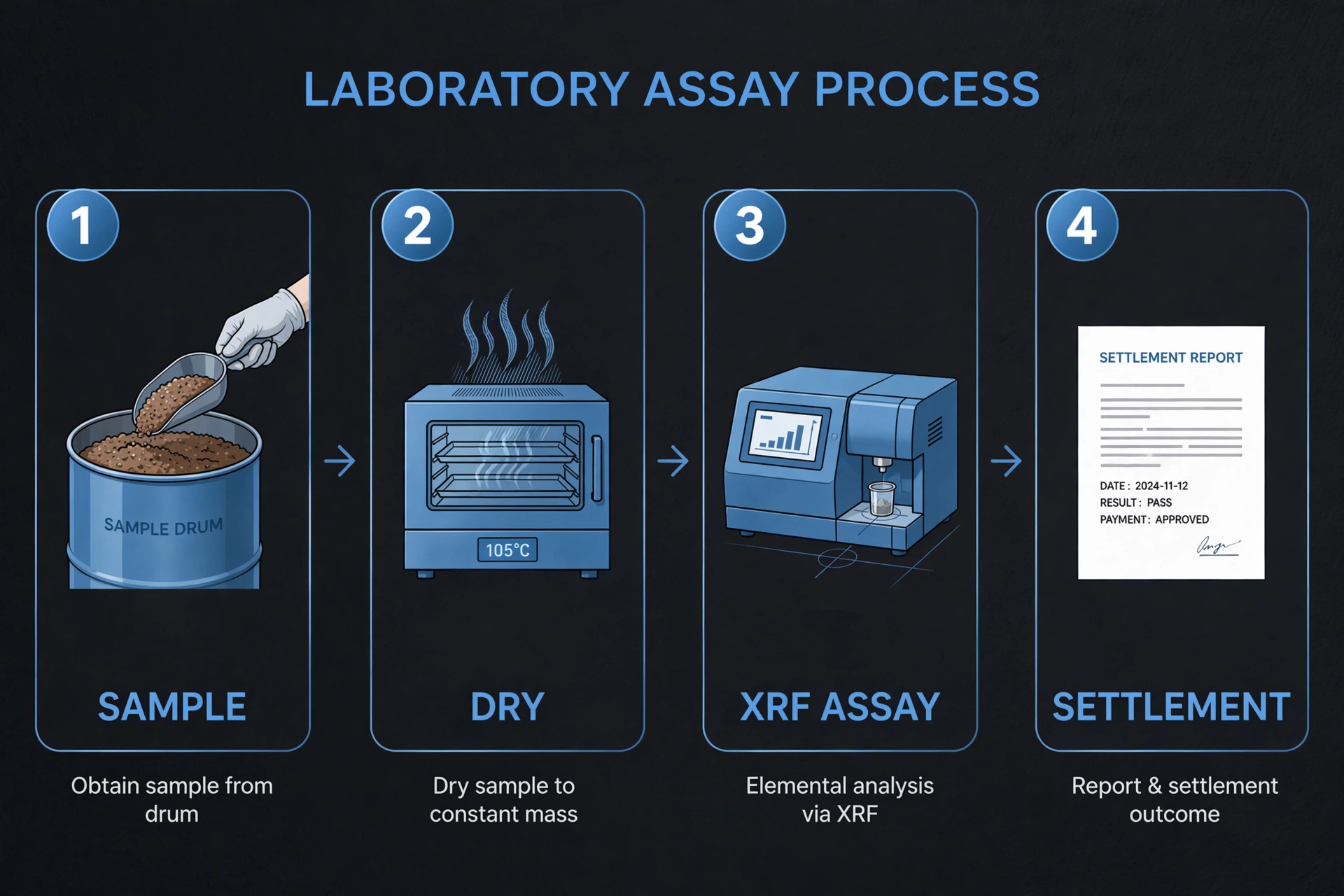
Before anything is dried or tested, a representative sample is pulled from the drum — not just off the top, where the liquid sits, and not just off the bottom, where the heavy material settled, but a cross-section that represents the whole drum. This matters more than most sellers realize: sludge stratifies, with liquid on top and dense carbide on the bottom, so a lazy top-only sample understates the tungsten and a bottom-only sample overstates it. A proper sample tells the truth about the full drum. If you ever watch a buyer sample your drums, watch for this — it is the first sign you are dealing with an honest grader.
The sample is weighed wet, then dried — typically in an oven or drying chamber until the weight stops dropping, which means all the free moisture and volatile coolant has left. The difference between the wet weight and the dry weight is the moisture content, and it is usually the biggest single deduction in sludge pricing. A drum that was half coolant loses half its weight right here. This is not a penalty and it is not negotiable — it is physics. Water is not tungsten, and nobody pays tungsten prices for water. The shops that drain their drums before sealing them walk into this step with far less to lose, which is why proper drum handling shows up directly in the settlement.
The dried sample goes to laboratory analysis — typically X-ray fluorescence (XRF), which reads the elemental composition in minutes, or a full wet-chemistry assay for formal settlement. XRF is a machine that bombards the sample with X-rays and reads the energy signature bouncing back; every element has its own signature, so the machine reports exactly what percentage of the sample is tungsten, cobalt, nickel, iron, and everything else. The tungsten percentage of the dry sample is your assay result. Multiply it by the dry weight and you have contained tungsten. Two drums from the same shop can assay differently — different grinding operations, different ratios of carbide to steel grinding, different coolant — which is why every lot is sampled and assayed on its own merits instead of priced off somebody else's drum.
Sellers sometimes hear "moisture deduction" as a buyer taking something from them. It is the opposite: the deduction is what keeps the pricing honest. A 500-pound drum at 40 percent moisture holds 300 dry pounds. A 500-pound drum at 10 percent moisture holds 450 dry pounds. Same scale weight, wildly different tungsten — and the drying step is simply how the buyer finds out which drum you brought. Oily sludge gets treated more cautiously than water-based sludge for a real reason: heavy cutting oil does not dry off cleanly, it can interfere with the assay, and it costs more to process out. None of this is negotiable because none of it is judgment — it is measurement. The seller's leverage is not in arguing the deduction. It is in delivering drier, cleaner drums that have less to deduct.
Every Ironcrest sludge settlement shows the same four lines. Wet weight received — what the drum weighed on arrival. Dry weight — what remained after drying, with the moisture percentage shown. Assay result — the laboratory tungsten percentage of the dry material. Contained tungsten — dry weight times assay, the payable pounds. Then the total, priced against the current tungsten market. If any buyer ever hands you a single lump number with no breakdown, ask for the four lines — and if they cannot produce them, you are not getting an assay-based price. The breakdown is also your coaching tool: low dry weight means drain better, low assay means separate your carbide grinding from your steel grinding. Every settlement makes the next drum worth more.
Want your drums assayed and quoted honestly? Text photos to 312-880-8174 — I will walk you through exactly what your material should bring.
Ironcrest's carbide sludge buying program →
Every lot is sampled and assayed on its own merits. Photos of your drums, the grinding operation behind them, and your location start the quote — written number up front, itemized four-line settlement after processing, payment within 24 hours.
For solid carbide tooling with a published price: see current scrap carbide prices per pound.
Drum photos, grinding operation, and location — by text, quote form, or email.
A written number based on estimated dry weight, likely assay, and the current market.
Sampling, drying, and lab assay with the four-line settlement, then payment within 24 hours.
Send a photo, get a fast, free no-obligation quote — or call 312-880-8174.