Send photos
Photograph the drums, how full they are, and the grinding operation behind them. Send them by text, through the quote form, or by email.
There is a drum sitting in the corner of your shop right now that could be worth thousands of dollars, and most shops either pay somebody to haul it off or let the coolant guy take it for free. I'm Sonny, I buy tungsten carbide grinding sludge for top money, and this is the most overlooked pile of cash in American machine shops.
 FIELD GUIDE
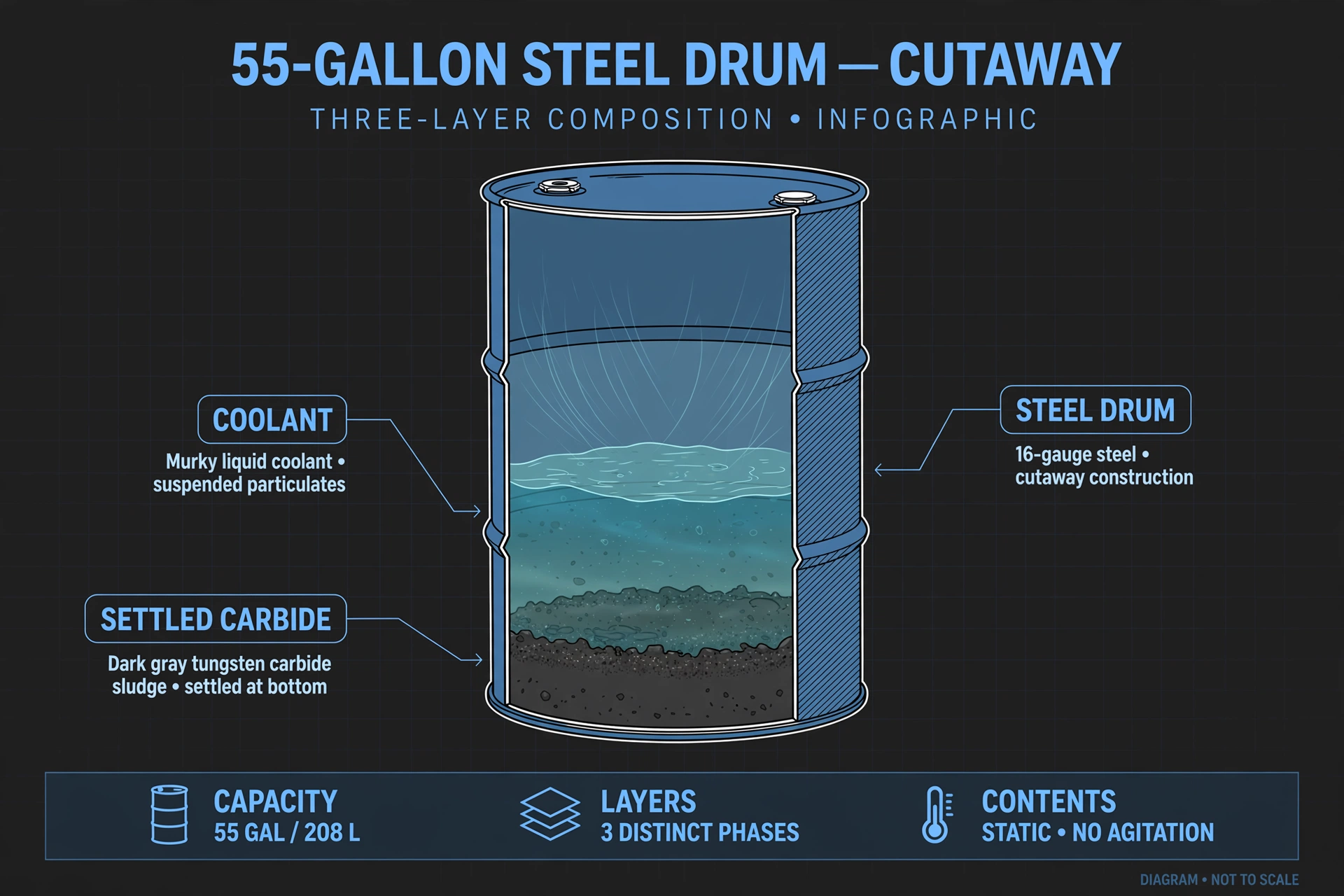
Carbide grinding sludge is not waste. It is tungsten carbide — the same valuable material as the cutting tools it came from — just in tiny particles suspended in coolant and oil. Every time a carbide end mill, drill, or insert gets ground, microscopic carbide washes off into the coolant, settles to the bottom of the drum, and concentrates there. Dry it out and assay it, and you are holding concentrated tungsten carbide with genuine market value. A single full 55-gallon drum can be worth thousands of dollars. Shops that grind carbide every day fill drums like this on a regular schedule, which means the drum in your corner is not a disposal problem. It is a revenue stream you have not turned on yet.
Nobody told them. Most shop owners know exactly what a worn end mill is worth, but the sludge that comes off the grinder reads as dirty coolant, not as carbide. It looks like mud. It smells like oil. Nothing about it says money until somebody explains contained tungsten to you.
The coolant hauler takes it for free. This is the expensive one. Coolant service companies haul away spent coolant, and the settled carbide at the bottom of those drums goes with it. You are effectively paying somebody to carry your tungsten out the back door. If a hauler is taking your grinding sludge, ask yourself what they are doing with it after it leaves your shop.
It seems like too much trouble. Drums are heavy, freight sounds complicated, and nobody wants another project. That is exactly why I arrange the freight myself on multi-drum lots and quote from photos before you lift a finger. The trouble is mine, not yours.
Sludge is priced on one thing: how much actual tungsten carbide is in the drum once the water, coolant, and oil are removed. That is called contained tungsten. A drum might weigh 500 pounds wet and hold 200 pounds of dry carbide-bearing material at 50 percent tungsten — that is 100 pounds of contained tungsten, and that is what gets paid for. The exact number comes from drying and assaying a sample, and every settlement I send shows the wet weight, the dry weight, and the assay result as separate lines so you can see exactly how your number was built. If you want the full walkthrough of the math, read how much carbide sludge is worth.
Mixing in steel swarf. Grinding steel and carbide into the same drum dilutes the tungsten content, and the assay will show it. Dedicated carbide-only drums assay higher and pay more. Leaving it soaking. Every gallon of coolant sitting in the drum is weight you do not get paid for. Drained drums settle better and assay cleaner. Tossing trash in the drum. Rags, floor sweepings, cigarette butts, random hardware — all of it contaminates the sample and costs you money. Treat the sludge drum like inventory, because that is what it is. I wrote a full guide on how to store carbide sludge for maximum value if you want the shop-floor version.
If you are paying a hauler to take grinding sludge, or letting it pile up because nobody ever put a number on it, you are leaving thousands of dollars on the table every year. I pay top money for carbide grinding sludge — wet or dry, one drum or twenty — and I will tell you what your drums are worth from photos before you commit to anything. Text me photos of the drums, tell me what grinding operation produced the sludge, and I will run the numbers with you. The drum in the corner is not waste. It is tungsten, and tungsten is money.
Call or text 312-880-8174 — I answer my own phone.
Sludge is quoted on assay, not on a per-pound board — every lot is different, so clear photos of the drums, how full they are, and what grinding operation produced the sludge are all it takes to start. You deal directly with the buyer: send photos and get a fast, free no-obligation quote, with freight arranged on multi-drum lots anywhere in the country.
For solid carbide tooling, the numbers are simpler: see current scrap carbide prices per pound.
Photograph the drums, how full they are, and the grinding operation behind them. Send them by text, through the quote form, or by email.
We estimate dry weight and tungsten content from your photos and the current market, and put a written number on your drums.
Freight arranged on multi-drum lots, itemized settlement after drying and assay, payment within 24 hours.
Send a photo, get a fast, free no-obligation quote — or call 312-880-8174.