▲ IRONCRESTINDUSTRIALINDUSTRIAL SURPLUS BUYERS
FRIENDLY GUIDES • HUB • 13 MIN READ • UPDATED OCTOBER 2026

YOUR FRIENDLY GUIDE TO ALL THINGS COPPER

I am Sonny, and I buy copper for a living in Chicago. I built this guide because nobody had put the whole copper story — pipes, wire, gutters, mining, and ten thousand years of history — into one plain-language place, so here it is.
20+ Guides & ToolsBeginner to MasterFree Forever
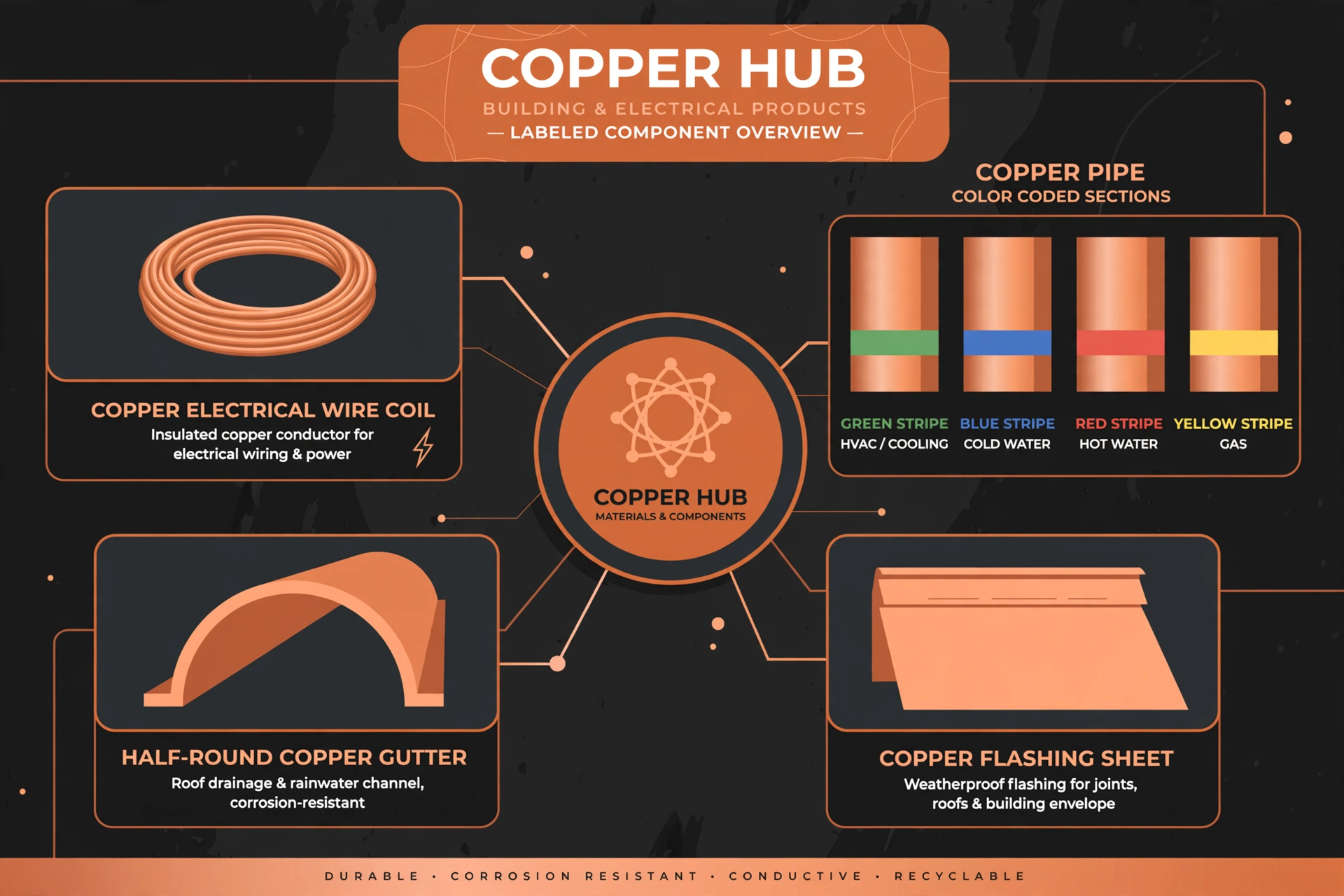
Diagram cluster of copper products: a coil of copper electrical wire, copper pipe sections with green, blue, red, and yellow stripes, a half-round copper gutter profile, and a sheet of copper flashing.
Wire, pipe, gutters, flashing — every copper story starts in one of these.
THE SHORT VERSION

TL;DR

  • Copper is element Cu, atomic number 29 — the red metal in your walls and under your floors, and the second-best electrical conductor on earth after silver.
  • This is the Friendly Guides hub for all of it: pipe types, wire grades, gutters, mining, history, and where copper hides in your home.
  • Pick your lane below: Beginner, Working Pro, Veteran, or Master. Each path lists the guides in the order I would read them.
  • Everything here is free, written in plain language, and checked against real numbers, real tables, and real code.
  • Every page ends with "What to do with the cutoffs" — what leftover copper from the job is honestly worth, and one number to call when you are ready to sell.
START HERE

Four learning paths. Pick your lane.

This is the part nobody else does. Instead of dumping twenty pages on you, each path puts the guides in reading order for your level. Start at the top of your lane and read down.

Beginner — curious homeowner, career-changer, first-year apprentice.

You are starting from zero, and that is the best place to start. This path takes you from "what even is copper" to a full picture of where it comes from and where it hides, in about half an hour of reading.

  1. What Is Copper. Read the guide →
    The red metal, explained like a friend would: what the element is, why it conducts, and what it looks like in the wild.
  2. Why Copper Turns Green. Read the guide →
    The patina story: what the green layer is, why it protects instead of destroys, and what green copper means for scrap value.
  3. How to Identify Copper. Read the guide →
    The magnet test, the color check, and the lookalikes that fool people: brass, bronze, and copper-coated steel.
  4. Where Copper Hides in Your Home. Read the guide →
    The full copper audit: wire, pipe, gutters, flashing, AC line sets, and motors. After this one you will never look at a house the same way.
  5. How Copper Is Mined. Read the guide →
    From an open pit in the ground to 99.99 percent pure copper, in plain language with a labeled diagram.

Working Pro — journeyman, installer, service tech.

You touch copper every day and you want the working knowledge: grades, wire types, pipe letters, weights, and how a mixed pile sorts out.

  1. Copper Grades Explained. Read the guide →
    Bare bright, number 1, number 2, insulated: how the trade grades copper and what each grade actually looks like.
  2. Copper Wire Grades Guide. Read the guide →
    Romex, THHN, service cable, and the rest: how wire types grade out when the jacket comes off.
  3. Copper Pipe Types, Decoded. Read the guide →
    Type K, L, M, and DWV: the stripes, the wall thicknesses, and where each one belongs.
  4. Copper Wire Weight Chart. Read the guide →
    The chart every estimator and scrapper keeps bookmarked: weight per foot by wire type and gauge.
  5. Sorting Copper Scrap. Read the guide →
    How crews sort a mixed pile so the grades stay clean and the money stays in the bucket.

Veteran — foreman, shop owner, inspector-adjacent.

You already know the grades and the gauges. This lane is the deep background: how the yard sees your material, the long history of the metal, and the supply chain behind it.

  1. The Copper Grading Process. Read the guide →
    What the yard sees when it sees your copper: how grading decisions get made on the scale.
  2. The History of Copper. Read the guide →
    Ten thousand years of the metal that built civilization, in about ten minutes of reading.
  3. Copper Gutters Guide. Read the guide →
    Fifty to one hundred years of gutters: the patina story, soldered seams, and the honest pros and cons.
  4. Copper Supply Chain. Read the guide →
    From the mine to the mill to the job site, and back through the scrap loop that keeps it all moving.

Master — engineer-curious, the "read for fun" expert.

You read about your trade because you like it. This lane is the money layer: where the market sits, why it moves, and what the 2026 run means.

  1. Copper Price Today. Read the guide →
    Where the market sits right now and what the number on the board actually means.
  2. Why Copper Prices Move. Read the guide →
    The exchange, inventory levels, the dollar, and construction demand, in plain English.
  3. Copper Market Trends. Read the guide →
    The bigger picture: electrification, data centers, and where demand is heading.
  4. Copper at Record Prices in 2026. Read the guide →
    What this year's run means for sellers, crews, and anyone sitting on a pile.
  5. How Much Copper Is in a House. Read the guide →
    The teardown math: what a typical home holds in wire, pipe, and everything else.
TOPIC CLUSTERS

Every copper topic, grouped by interest.

Prefer to browse? Every guide in the hub lives in one of four clusters below.

NEW THIS MONTH

Fresh in the guide

COPPER BASICS

The fundamentals

TRADE GUIDES

Working with copper

MONEY AND THE MARKET

Copper as money

TOOLS

Copper tools worth bookmarking.

Reference tools from across the site that copper readers keep coming back to.

NO PAYWALL, EVER

Why this guide is free.

No sign-up, no paywall, no email required to read a single word. I buy scrap metal for a living — these guides are how I give back to the trades and the curious. And yeah, if you ever have copper to sell, I hope you call me first. — Sonny

READ THE COPPER NOTE
QUESTIONS, ANSWERED

Copper guide FAQ.

What is the Friendly Guide to All Things Copper?

It is the hub page for everything copper on this site: pipe types, wire grades, gutters, mining, history, and where copper hides in your home. The guides are organized into four learning paths (Beginner, Working Pro, Veteran, Master) so you can start at your level and read in order.

Who is this copper guide written for?

Curious homeowners, first-year apprentices, working journeymen, foremen, and the masters who read about their trade for fun. Each learning path sequences the guides for a different level, so a beginner and a veteran can both find their starting point.

Is everything in the copper guide really free?

Yes. Every guide, chart, and tool in this hub is free to read with no sign-up and no paywall. The guide is supported by our scrap-buying business: we buy copper wire, pipe, and brass from the same crews and homeowners these guides are written for.

Do these guides replace trade school or a license?

No. Every guide explains how copper work is actually done, but nothing here replaces training, apprenticeship, or a license. Plumbing work is framed around licensed-pro judgment, and every guide points to the applicable code: the NEC for electrical, EPA Section 608 for refrigerant, and the IPC or UPC for plumbing.

Where should I start reading?

Start with the Beginner path: What Is Copper, then Why Copper Turns Green, then How to Identify Copper, then Where Copper Hides in Your Home, then How Copper Is Mined. That order takes you from zero knowledge to a full picture in about half an hour.

What do the colors on copper pipe mean?

The stripe is a quick ID for wall thickness and use. Green is Type K (thickest, underground and service lines), blue is Type L (standard interior water lines), red is Type M (thinner, light residential), and yellow is DWV (drains only, never for pressure). The full breakdown lives in our copper pipe types guide.

What should I do with leftover copper from a job?

Keep it. Cutoffs, pulled wire, pipe scraps, and old line sets are worth real money, and most crews split the bucket. When you are ready to sell, call or text Sonny at 312-880-8174 for a number on what you have.

Can I suggest a copper topic for the guide?

Yes. If there is a copper topic you want explained, a comparison you want settled, or a procedure you want walked through, call or text 312-880-8174 and say what you need. The guide grows based on what readers actually ask for.

THE SIGNATURE ENDING

What to do with the cutoffs.

  • Every copper job leaves material behind: wire cutoffs, pipe scraps, line-set ends, pulled feeders, old gutters
  • On most crews the bucket gets split — the material is worth more than the dump run it was headed for
  • Keep the copper clean and separate: bare wire with bare wire, pipe with pipe, insulated wire in its own pile
  • Ironcrest buys copper wire, copper pipe, brass, and carbide from working crews and homeowners
  • One direct contact for all of it: Sonny at 312-880-8174
ONE DIRECT CONTACT

Talk to Sonny, not a department

Every quote, pickup, and payment runs through one person who answers the phone: Sonny Johns at 312-880-8174. No portals, no ticket queues, no waiting on a committee.

  • PHOTO QUOTES — Send photos of the material and get a real number back.
  • TRADE FRIENDLY — Built for crews: wire, pipe, brass, and carbide, by the bucket or by the truckload.
  • US ONLY — Your material never leaves the United States.

Start with photos →

WHY I WROTE THIS

A note from Sonny.

I handle copper every week — I weigh it, I grade it, I pay for it, and I hear the same questions from crews and homeowners over and over. What do the colors on the pipe mean? Why did my gutters turn green? Is this worth anything? I wrote the guide I wish I could hand people instead of answering one text at a time. If you read one page here and it saves you a callback or puts money in your pocket, it did its job.

And when the bucket fills up, you know my number: 312-880-8174. I will take it from there.

Suggested next read: Copper vs PEX — the honest national guide to the repipe debate, including the money hook neither side mentions: either way, the old copper coming out is worth real money.